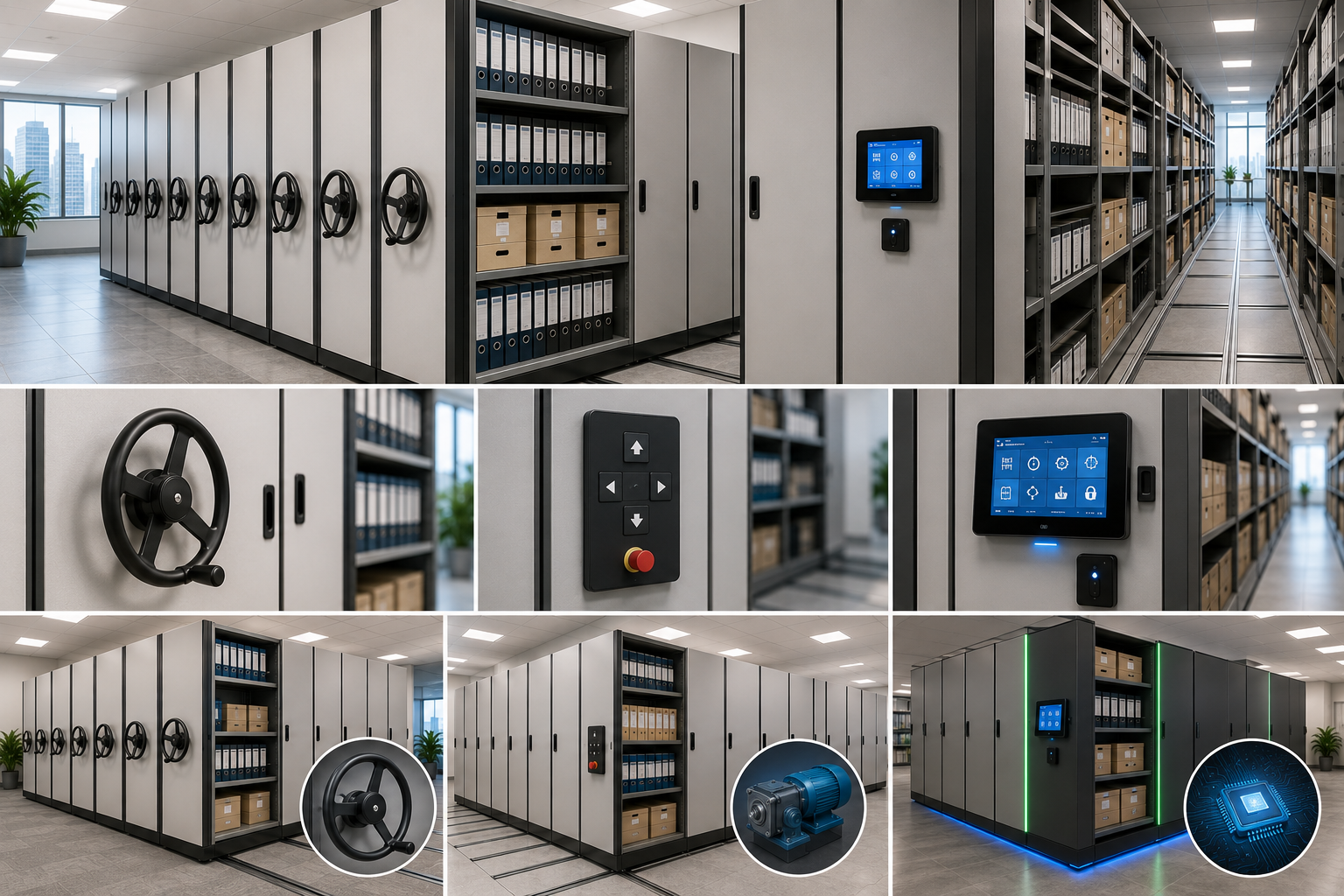
Mobile compactor systems utilize manual, mechanical, or motorized drive mechanisms to slide shelving units along floor tracks and maximize storage space. Buyers can choose a mobile compactor manual electric automated Philippines configuration based on whether they prefer physical rotary handles, geared handwheels, or push-button motorized operation. These drive systems allow for high-density filing by creating temporary access aisles only when needed, which significantly reduces the required floor footprint.
As office spaces in Metro Manila and growing business hubs across the Philippines become increasingly expensive, managing physical archives within a limited footprint presents a significant operational challenge. Traditional shelving often wastes valuable square footage, leading to cramped workspaces and inefficient retrieval processes. Selecting the right mobile compactor drive system is not merely a matter of budget; it is a strategic decision that impacts workplace ergonomics and long-term durability against the local climate. This guide explores the distinct advantages of manual, mechanical, and electric automated systems to help you identify the optimal high-density storage solution for your institution. We will compare these technologies based on ease of use, maintenance requirements, and overall investment value in the Philippine context to ensure your storage infrastructure supports your operational growth.
Understanding Mobile Compactor Storage Systems in the Philippines
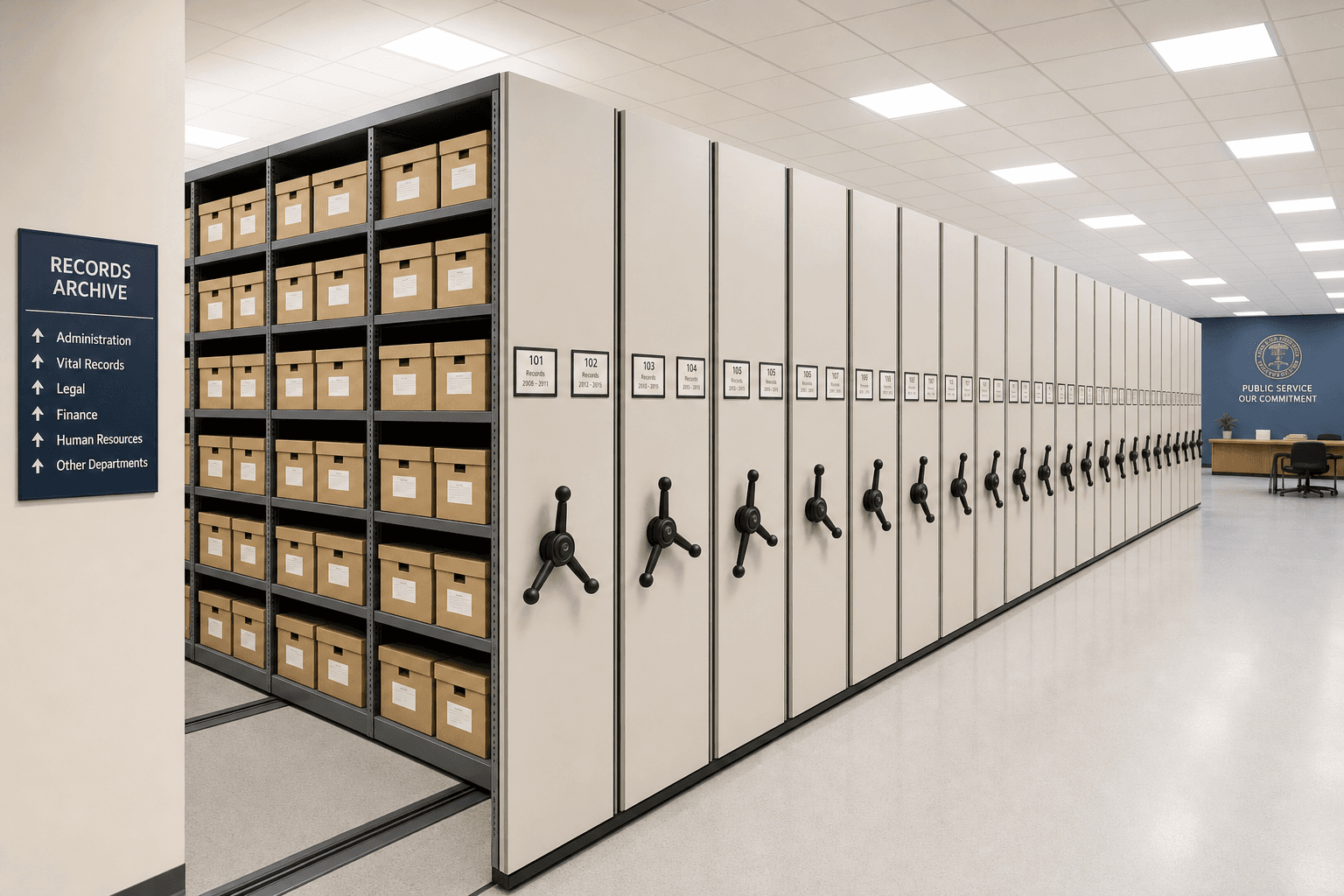
Mobile compactor storage systems consist of high-density shelving or racking units mounted on wheeled bases that glide along a floor-level track. The primary value proposition of these systems is the elimination of multiple fixed aisles. By consolidating several rows into a single movable block, these systems can increase storage capacity by up to 70 percent compared to traditional static shelving. In the Philippine context, where office and warehouse space in central business districts remains at a premium, this space-saving efficiency is indispensable.
As a specialized mobile compactor supplier, RA Integrated Solutions identifies three primary drive mechanisms: manual hand-push, mechanical-assist handwheel, and electric automated systems. Selecting the correct drive system is critical for long-term operational efficiency. For instance, a system used for high-frequency retrieval in a busy registrar office requires a different mechanism than a long-term archival vault.
We provide tailored professional fit-out services to help local government, commercial, and educational institutions evaluate their floor load capacity and usage patterns. In government procurement and institutional projects, understanding the nuances of a mobile compactor manual electric automated Philippines based selection ensures that the infrastructure remains scalable, safe, and easy to operate throughout its service life.
Manual Hand-Push Systems: Simple and Cost-Effective
Manual hand-push systems represent the most straightforward entry point into high-density storage. In these configurations, the user physically pulls or pushes a handle fixed to the face panel to slide the shelving unit along the floor-level track. Because they rely on direct physical exertion, these systems are ideally suited for small-scale applications where space is limited and the stored items are relatively lightweight, such as office supplies, stationery, or small libraries.
When evaluating a manual mobile compactor, it is important to distinguish it from mechanical-assist versions. A manual system does not feature internal gear ratios or chain-and-sprocket mechanisms. This lack of mechanical advantage means the effort required to move the unit increases linearly with the weight of the contents. Consequently, RA Integrated Solutions recommends these units for projects with lower storage density requirements or for organizations operating under strict budget constraints where the total carriage weight remains manageable for a single operator.
While they are the most cost-effective option in the mobile compactor manual electric automated Philippines market, manual systems have specific weight limitations to maintain user safety. Overloading a hand-push unit can lead to physical strain or track misalignment if pushed with excessive force. For institutional projects in the Philippines, these systems are often specified in high-grade cold rolled steel with an epoxy powder coating, ensuring durability despite their simpler operation. They serve as an excellent solution for back-of-house storage where retrieval frequency is low and the simplicity of the design minimizes long-term mechanical maintenance.
Mechanical-Assist Handwheel Systems: The Reliable Mid-Range Choice
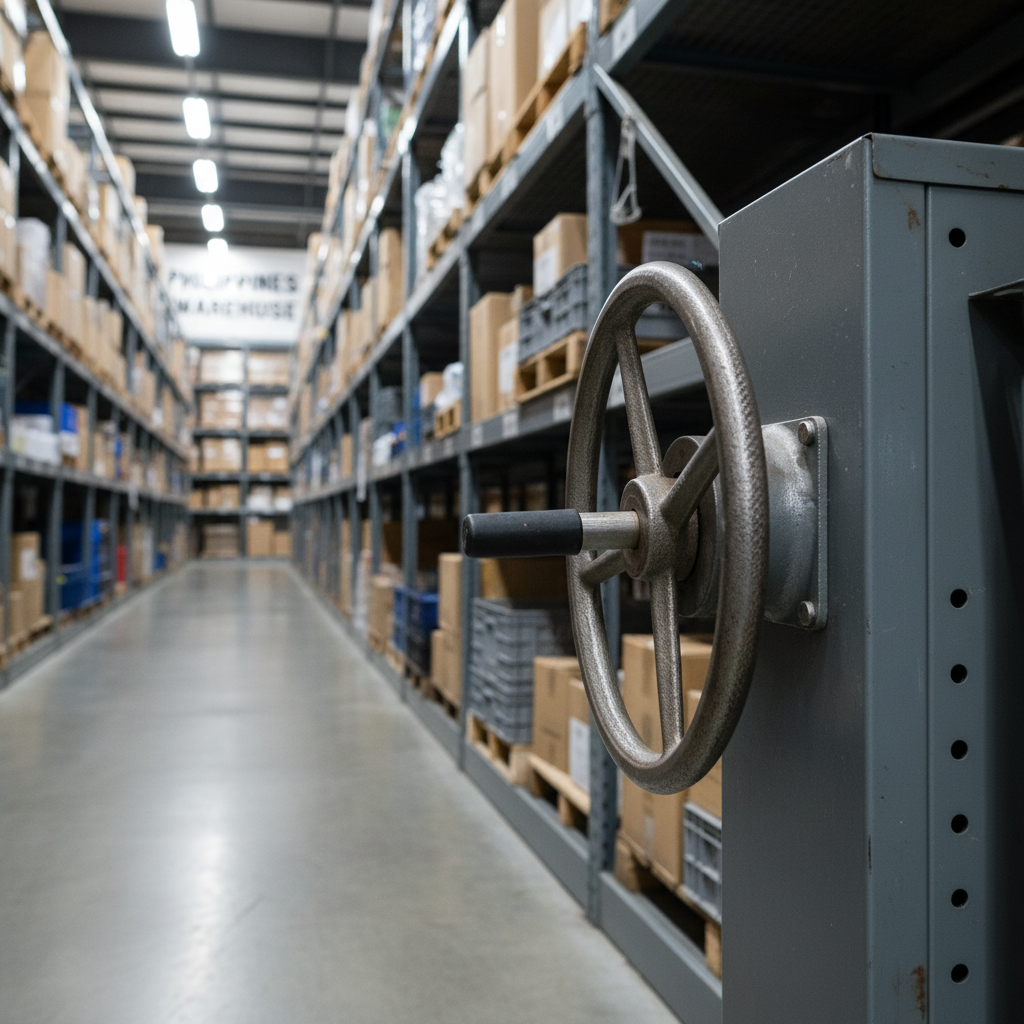
As storage requirements exceed the physical limits of a manual push system, the mechanical-assist handwheel system becomes the industry standard for efficiency. This configuration utilizes a rotary handwheel linked to a sophisticated geared chain-and-sprocket mechanism. Instead of pushing the carriage directly, the user rotates the wheel to engage a drive shaft that moves the unit along the rails. This design is a primary choice in the mobile compactor manual electric automated Philippines market, bridging the gap between entry-level storage and high-end automation.
The primary advantage of this system lies in its gear ratios. Through mechanical advantage, a small amount of rotational force applied to the handwheel is amplified to move thousands of pounds of shelving. By selecting specific gear reductions, an operator can move multiple fully loaded carriages simultaneously with minimal physical exertion. This makes mechanical-assist systems ideal for medium-to-heavy loads found in government procurement projects, such as high-volume case files in archives or dense corporate record rooms. The mechanical nature of the drive ensures that the system remains functional even during the power fluctuations that can occasionally affect Philippine business districts.
Reliability in the local environment depends on specific engineering features provided by a specialized mobile compactor supplier. High-quality systems in the Philippines typically include floor-leveling tracks with adjustable foot caps; these allow for a perfectly horizontal installation even on uneven concrete subfloors common in local architecture. Furthermore, anti-tilt mechanisms, often utilizing specialized nylon guides, ensure that tall units remain stable and secure during movement. By utilizing professional fit-out services, organizations can ensure these systems are calibrated for a 40kg Uniformly Distributed Load (UDL) per shelf. These units are constructed from high-grade cold rolled steel with an epoxy powder coating to resist humidity and wear, ensuring the mechanism remains fluid for decades of service.
Electric and Automated Mobile Compactors: The Future of High-Density Storage

While mechanical systems provide a robust solution, electric and automated mobile compactors represent the technological evolution of high-density storage. These motorized systems replace the handwheel with intuitive push-button controls or integrated touchscreens, allowing users to open an aisle with a single tap. For high-volume facilities like university libraries or central medical archives, this eliminates physical effort entirely, facilitating a more inclusive and ergonomic workspace.
Safety is the foremost priority for motorized configurations, especially in high-traffic environments. These systems are engineered with multi-layered safety protocols, including infrared sensors that detect movement within an open aisle and floor-level safety sweeps. If a person or an object, such as a fallen file or a piece of equipment, obstructs the carriage path, the system immediately halts to prevent injury or damage. Emergency stop buttons are standard on every face panel, providing manual overrides for immediate intervention during operation.
A key technical advantage of these systems is the implementation of soft-start and soft-stop technology. By gradually accelerating and decelerating the motor, the system prevents the jarring vibrations that can occur with sudden movements. This feature is essential for protecting fragile contents, such as historical artifacts in museum collections, delicate laboratory samples, or sensitive electronic components that could be displaced by abrupt shifts.
In the context of the mobile compactor manual electric automated Philippines landscape, automation is increasingly paired with digital management. Modern institutional projects now frequently specify systems that integrate with RFID technology or existing database software. This allows for automated retrieval where the system can pre-open the specific aisle containing a requested item based on a digital inventory record. As a mobile compactor supplier focused on future-proofing, RA Integrated Solutions sees these automated features as vital for organizations looking to optimize both their physical footprint and their digital workflow through professional fit-out services.
Comparison Table: Manual vs Mechanical vs Electric Systems
Selecting the appropriate drive system requires balancing organizational needs against budget and infrastructure constraints. The table below provides a technical breakdown of the mobile compactor manual electric automated Philippines market options based on critical operational metrics.
Factor | Manual Hand-Push | Mechanical-Assist | Electric / Automated |
|---|---|---|---|
Ease of Use | Physical effort required; best for occasional access. | Minimal effort via geared handwheel rotation. | Effortless; one-touch button or touchscreen control. |
Load Capacity | Light loads; optimized for office supplies and small folders. | Heavy-duty; handles thousands of pounds via gear ratios. | Heavy-duty; supports maximum density with soft-start motors. |
Safety Features | Basic unit-to-unit locks. | Anti-tilt guides and central locking mechanisms. | IR sensors, safety sweeps, and emergency stop buttons. |
Relative Cost | Lowest upfront investment. | Moderate; offers the highest long-term ROI. | Highest initial cost due to electronics and motors. |
While automated systems provide superior ergonomics and sophisticated safety for high-usage environments, mechanical-assist units remain the most frequent choice for government procurement. This preference stems from their mechanical reliability during power fluctuations and their durability in environments where maintenance budgets may be restricted. For smaller offices, a manual mobile compactor serves as a practical, budget-friendly entry point. RA Integrated Solutions assists clients in navigating these choices through professional fit-out services, ensuring the selected system aligns with the specific floor load and retrieval frequency of the facility. Choosing the right mobile compactor supplier ensures that technical specifications, like the 40kg UDL per shelf, are met regardless of the drive mechanism chosen.
Key Selection Criteria for Philippine Institutions

Selecting the right drive mechanism requires a clear audit of daily operations. Frequency of access is the most decisive factor; high-traffic registrar offices or university libraries benefit significantly from electric systems to reduce wait times and physical fatigue. Conversely, if access is restricted to once a week for long-term records, a manual or mechanical system is more appropriate. For archives holding heavy legal documents or bulk medical records, the load weight dictates the mechanical advantage needed. A standard shelf typically supports a 40kg Uniformly Distributed Load (UDL), but the cumulative weight of a ten-bay carriage necessitates a mechanical-assist or powered system to ensure worker safety and prevent system strain.
Structural considerations are equally paramount for Philippine institutions. Organizations must evaluate the building's floor load capacity before installation, as high-density storage concentrates significant weight in a small footprint. In many Philippine commercial buildings and older government offices, floors are rarely perfectly level. Precise track leveling is mandatory; even a slight gradient can cause manual carriages to drift or motorized units to experience premature motor wear. This requires specialized grouting and leveling techniques to ensure the rails provide a true, horizontal surface for the carriages.
Successful implementation depends on a partner that understands these local architectural nuances. RA Integrated Solutions provides professional fit-out services that include comprehensive site inspections and floor leveling assessments. As a specialized mobile compactor supplier, we ensure that every manual mobile compactor or automated system is installed with exacting tolerances. This level of technical oversight, common in government procurement projects, ensures the mobile compactor manual electric automated Philippines based solution remains a stable, long-term asset for the institution through dedicated site inspection and preventative maintenance.
Maintenance and Durability in the Local Climate
High relative humidity and ambient dust levels in Philippine urban centers significantly impact the longevity of high-density storage. In mechanical-assist systems, the drive chain and sprocket assembly require periodic lubrication with moisture-resistant grease to prevent oxidation. Airborne particulates can accumulate within the floor tracks, creating friction that compromises the smooth glide of the carriages. Regular vacuuming of the rails and inspection of the drive shaft bearings are essential to maintain the mechanical advantage these systems provide.
Electric systems require more specialized oversight. Humidity can lead to condensation on infrared safety sensors, causing false readings that stop the carriages unexpectedly. Technicians must calibrate these sensors and verify the integrity of the wiring to ensure the soft-start motors operate within their thermal limits. Because these components are specialized, sourcing a mobile compactor manual electric automated Philippines solution from a local mobile compactor supplier is a strategic advantage. Unlike direct imports, a local partner provides immediate access to spare parts and professional fit-out services for scheduled maintenance. This proximity ensures that if a sensor fails or a track requires re-leveling due to building settling, technical support is reachable without the delays associated with international shipping and customs.
Choosing the right drive system is a critical step in optimizing your office storage. Whether you prefer the simplicity of manual systems or the advanced efficiency of automated ones, the goal is to enhance organization and space utilization. If you find the selection process complex, RA Integrated Solutions A Brand of Rootstone Approach Furniture Trading is here to assist. If you want expert help to find the perfect Mobile Compactor for your specific workspace requirements, our team can guide you through every technical detail to ensure a seamless implementation.