
Choosing an office furniture supplier in the Philippines means separating a genuine B2B partner from a transactional reseller. Whether you lead commercial procurement for a corporation, BPO, bank, or developer — or manage public-sector bidding under RA 12009 — the same fundamentals apply: total cost of ownership, specification compliance, lead-time reliability, and documentable after-sales support. This guide gives commercial and government procurement teams a shared framework for evaluating suppliers on execution, not just unit price.
For commercial procurement teams and B2B buyers, procuring office assets often feels like a balancing act between budget discipline and the need for furniture that lasts five to ten years in tropical humidity. The challenge lies in telling a true technical partner apart from a reseller who wins on low unit price and quietly shifts risk to you later. This guide walks through the evaluation criteria that matter most to commercial, institutional, and government buyers alike.
The Landscape of Commercial and B2B Office Furniture Procurement in the Philippines
The Philippine office furniture market is shifting from retail purchasing toward integrated, technical procurement. In Metro Manila's dense business districts — and across PEZA-registered ecozones — private companies now treat furniture as an operational investment rather than an expense line. Commercial procurement teams, from BPOs scaling headcount to banks and developers fitting out new floors, increasingly evaluate suppliers on the same technical rigor that government BACs have long required.
Choosing a supplier is a strategic B2B partnership that directly influences facility maintenance and organizational productivity. Unlike retail stores that prioritize unit sales, an integrated office furniture supplier in the Philippines manages the full chain — trading, supply, delivery, installation, and maintenance — so commercial buyers get one accountable party instead of a fragmented chain of resellers.
Key Factors for Evaluating an Office Furniture Supplier for B2B Buying
Effective evaluation for commercial and B2B procurement begins by distinguishing a basic reseller from a technical partner. A reseller focuses on the transaction; an integrated supplier handles specification, sourcing, delivery, installation, and long-term maintenance. For a corporate buyer or a government BAC officer, that distinction determines whether the project is delivered on schedule and on spec, or handed back to you to manage.
Technical expertise should be measured by a provider's ability to handle multi-layered projects. For commercial buyers, this means the capacity to produce detailed documentation, material certifications, and installation drawings — not just a catalog and a price sheet. For government projects, the same technical depth is what satisfies the BAC's evaluation of responsiveness to specification under RA 12009 and RA 9184.
When reviewing a supplier, consider their history with integrated office fit-out services. A supplier that controls the entire chain, from trading to long term maintenance, reduces the risk of fragmented sourcing. This holistic approach prevents common issues like mismatched finishes across different floor levels or the inability to source replacement parts for ergonomic mechanisms three years after the initial purchase.
Evaluation Criteria | Transactional Reseller | Integrated Solutions Provider |
|---|---|---|
Product Range | Standard catalog items | Custom desking, compactors, and operable walls |
Technical Depth | Basic assembly | Architectural integration and maintenance |
Compliance | Minimal documentation | Full PhilGEPS and institutional audit support |
Project Scope | Delivery only | Comprehensive office fit-out services |
Analyzing the Quotation: Beyond the Unit Price
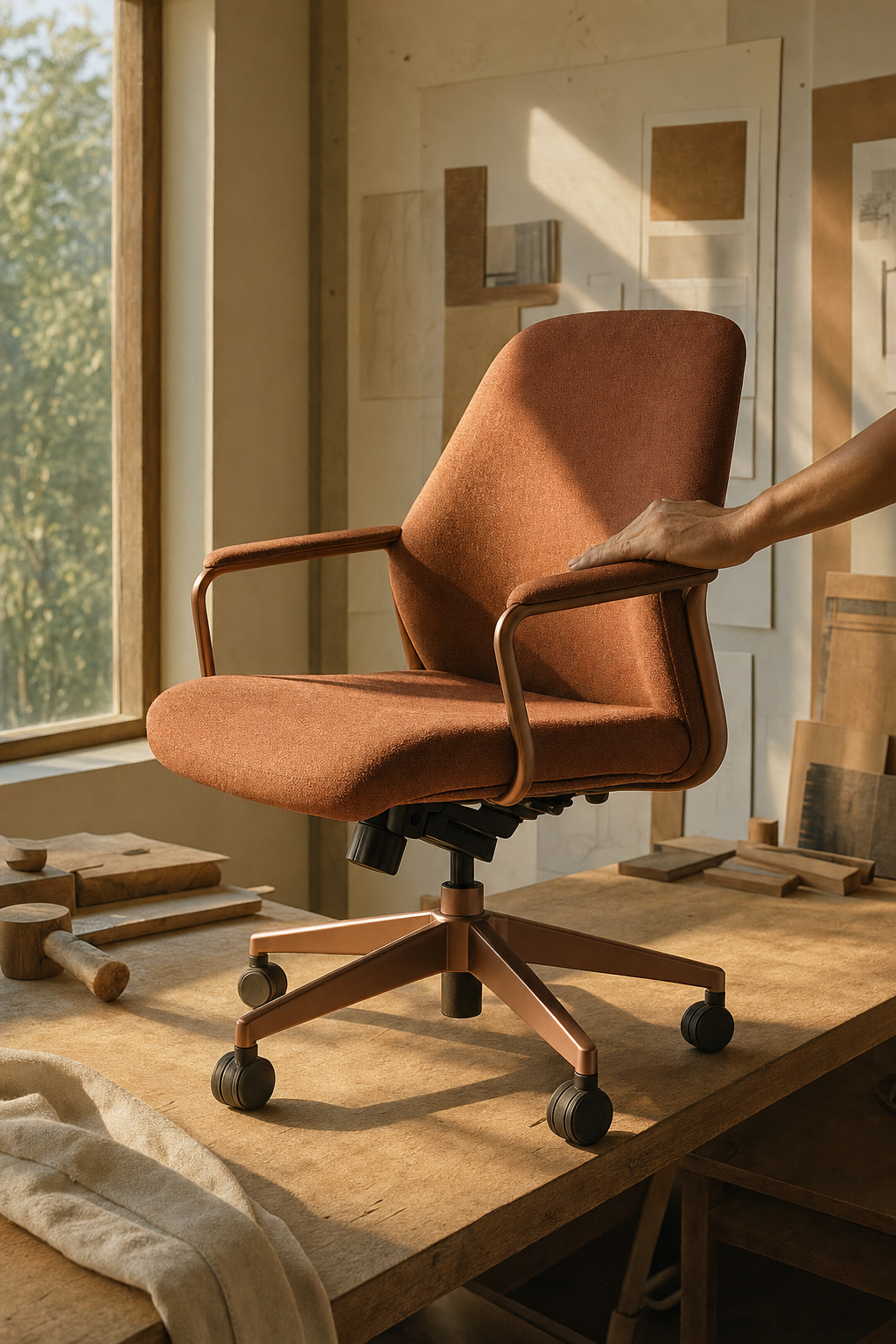
Strategic commercial procurement requires shifting from immediate expense to Total Cost of Ownership (TCO). When analyzing a proposal from an office furniture supplier in the Philippines, a B2B buyer should weigh lifespan, warranty coverage, maintenance needs, and replacement frequency — not just the sticker price. A chair that costs 15% less up front but lasts half as long is a liability on a corporate balance sheet, not a saving.
A comprehensive quotation should explicitly detail line items that retail invoices omit: specialized inside delivery, professional installation, debris clearing, and the coordination of after-hours work for active offices. For commercial buyers, these hidden costs are where a low unit price quietly becomes a higher true cost.
Lead times serve as another critical metric of supplier reliability. For architectural products like mobile compactors or operable partition walls, components are often imported or custom fabricated. A quote should provide a granular timeline rather than a vague estimate. This precision is vital for government procurement and commercial projects where occupancy dates are fixed. Furthermore, a significantly lower price point usually indicates compromises in material standards, such as lighter gauge steel or lower density foam. These compromises lead to higher maintenance cycles and early replacement, whereas a technically sound quotation accounts for durability and long term parts availability.
Pricing Component | Transactional Quote (Low Unit Price) | Strategic Technical Quotation (TCO Focus) |
|---|---|---|
Logistics | Curb-side delivery only | Inside delivery, positioning, and unboxing |
Installation | Basic assembly | Technical installation and leveling |
Lead Times | Vague windows | Specific milestones for import and site work |
Site Management | No debris removal | Full site clearing and waste disposal |
Technical Specifications and Material Standards

Evaluating technical specifications requires moving beyond surface aesthetics to the structural integrity of the components. For workstations, the standard for a professional office furniture supplier Philippines involves heavy-duty cold-rolled steel frames, typically between 1.2mm and 1.5mm in thickness. These should be finished with an electrostatic powder coating to prevent corrosion in coastal or high-traffic environments. When reviewing seating, high-density molded foam is the benchmark for durability; unlike cheaper cut foam, molded variants maintain their shape and support for years. Ergonomic chairs must also feature sophisticated mechanisms, such as synchro-tilt or multi-position locking systems, which allow the seat and backrest to move in a coordinated ratio, supporting the natural pivot points of the human body.
In the Philippine context, humidity resistance is a critical but often overlooked specification. Standard wood-based products can swell or delaminate due to the tropical climate. Specifiers should insist on Moisture Resistant (MR) grade boards or High-Pressure Laminates (HPL) with PUR edge banding, which creates a waterproof seal that prevents moisture ingress. For more complex office fit-out services, such as the installation of operable partition walls, the focus shifts to acoustic performance. These architectural products should be evaluated based on their Sound Transmission Class (STC) ratings, with a minimum of STC 40 required for standard meeting rooms and higher ratings for executive boardrooms.
Component | Minimum Technical Standard | Performance Indicator |
|---|---|---|
Desk Frames | 1.2mm Gauge Steel | Structural rigidity and weight capacity |
Chair Foam | 50kg/m³ Density (Molded) | Long-term compression resistance |
Board Material | MR Grade with HPL Finish | Resistance to tropical humidity and swelling |
Operable Walls | STC 40 - 50+ Rating | Acoustic privacy and sound attenuation |
Red Flags to Watch for in Supplier Proposals
Beyond technical specifications, the structure of a proposal reveals the operational maturity of an office furniture supplier. A primary red flag for commercial and government buyers alike is a vague or missing warranty clause. Philippine government TORs routinely require a minimum one-year warranty on parts and service commencing upon acceptance; private-sector buyers should hold suppliers to the same floor — and push for longer on ergonomic seating and steel storage.
Be wary of proposals that lack a detailed Bill of Materials (BOM). A professional provider must break down quantities, finishes, and exact dimensions to prevent scope creep or mid-project substitutions. For commercial procurement teams managing multiple sites or phases, a missing BOM is an early warning of an inconsistent, fragmented supply chain.
Currency volatility remains a hidden risk for imported goods. Proposals should state plainly whether pricing is fixed in Philippine Pesos or subject to exchange-rate adjustment. For corporate buyers planning quarterly CAPEX and for government entities budgeting against a fixed appropriation, an unstated currency clause can silently inflate the final cost.
Proposal Warning Sign | Operational Risk |
|---|---|
Short Warranty (<1 Year) | High failure rates and lack of manufacturer backing. |
No Physical Samples | Mismatched finishes and poor material quality. |
Missing Bill of Materials | Hidden costs and unauthorized product substitutions. |
Variable Pricing Clauses | Unplanned budget increases due to currency fluctuations. |
No Maintenance Support | Inability to repair specialized mechanical systems. |
The Crucial Role of Installation and Maintenance Services

Professional integration marks the difference between a collection of objects and a functional workspace. For complex architectural products like mobile compactors and operable partition walls, installation is a high precision task that determines the system’s lifespan. If a mobile compactor track is misaligned by even a few millimeters, the mechanical strain will eventually lead to gear failure. Similarly, operable walls require exact overhead tracking to maintain their acoustic integrity. Choosing an office furniture supplier Philippines that provides in-house technical teams ensures these systems are balanced, leveled, and safety tested before the site is handed over.
For commercial and institutional facilities across RIZ and Greater Manila, a local maintenance presence is a logistical necessity. BPOs and government offices operate on rigid occupancy and uptime schedules; a supplier with a nearby service team can respond to a failed chair mechanism or a misaligned operable wall panel in hours, not weeks.
Service Category | Critical Technical Requirement | Impact on Operations |
|---|---|---|
System Installation | Structural alignment and leveling for tracks and rails. | Prevents mechanical failure and safety hazards. |
On-site Maintenance | Rapid response teams based in RIZ or Greater Manila. | Reduces downtime for schools and government offices. |
Parts Availability | Local inventory of rollers, seals, and mechanisms. | Extends product lifecycle beyond the warranty period. |
Comparing Suppliers for Commercial vs Government Procurement
The distinction between public and private sector projects lies in the balance of procedural compliance versus design agility. In government procurement, a supplier must demonstrate PhilGEPS registration, technical compliance, and airtight documentation through every bidding stage. The same discipline increasingly serves commercial B2B buyers who need audit-ready sourcing for corporate governance.
Commercial and private-sector projects prioritize speed, brand alignment, and the flexibility to pivot during fit-out. A corporate buyer fitting out a BPO floor needs office fit-out services that can shift layout and finish mid-project without breaking lead times or warranty terms. The strongest suppliers serve both audiences with the same underlying rigor, applying compliance depth to government bids and design agility to corporate programs.
Procurement Factor | Government & Institutional | Commercial & Private Sector |
|---|---|---|
Primary Driver | Compliance and Auditability | Speed and Aesthetic Impact |
Documentation | PhilGEPS and Material Certifications | Design Submittals and Shop Drawings |
Procurement Cycle | Rigid, multi-stage bidding | Fast-tracked, agile negotiation |
Design Priority | Durability and standardization | Brand alignment and custom finishes |
Selecting a strategic partner for your workplace is a foundational step in ensuring long-term operational success. By focusing on quality, service, and local expertise, you can build a productive environment that truly reflects your brand values. While managing procurement independently is possible, the process often benefits from professional insights. If you want expert help navigating the complexities of sourcing Office Furniture, RA Integrated Solutions is here to guide you. Our team simplifies every step to ensure your workspace meets your specific functional and aesthetic goals.