
Effective modular office workstation Philippines procurement requires navigating open competitive bidding through PhilGEPS while strictly defining technical specifications for materials and space planning. Institutional buyers should evaluate the trade-offs between open-plan layouts and traditional cubicles to ensure the chosen furniture meets both budgetary constraints and government standards.
Navigating the complexities of procurement for modular office workstations in the Philippines often feels like a balancing act between strict budgetary limits and the urgent need for functional durability. Whether you are managing a government bidding process or outfitting a high growth commercial space, the wrong technical specifications can lead to costly logistical delays or underperforming workspaces that fail to inspire. At RA Integrated Solutions, we understand that furniture is an investment in your organizational efficiency; therefore, this guide provides a strategic roadmap for decision makers. We will examine essential components, technical specifications for institutional bidding, and standard dimensions tailored to the Philippine context. You will also find practical advice on budget estimation and layout selection to ensure your next procurement cycle delivers lasting value and seamless integration.
The Evolution of Workspaces: Navigating Modular Office Workstation Philippines Procurement
The Philippine workspace landscape has transitioned from rigid, fixed-wall environments to agile, reconfigurable systems. This shift is particularly evident in the growing complexity of modular office workstation Philippines procurement, where flexibility and scalability are now non-negotiable standards for modern office fit-out services. Unlike traditional carpentry, modular systems allow for rapid installation and future-proofing, enabling agencies to adapt their layouts as personnel requirements change without incurring the costs of major renovation or demolition.
Bids and Awards Committee (BAC) members, procurement officers, and facility managers often face the difficult task of balancing tight budgets with high-performance requirements. In the context of government procurement, the objective is to secure durable assets that meet PhilGEPS standards while fostering a productive, safe environment for employees.
This guide is designed to bridge the gap between technical bidding requirements and practical workplace design. Rather than simply listing products, we focus on the intersection of architectural standards and operational utility. By aligning material specifications with long-term facility needs, we help professionals navigate the procurement process with the expertise required for sophisticated institutional and commercial projects in the local market.
Essential Components of a Modular Workstation System
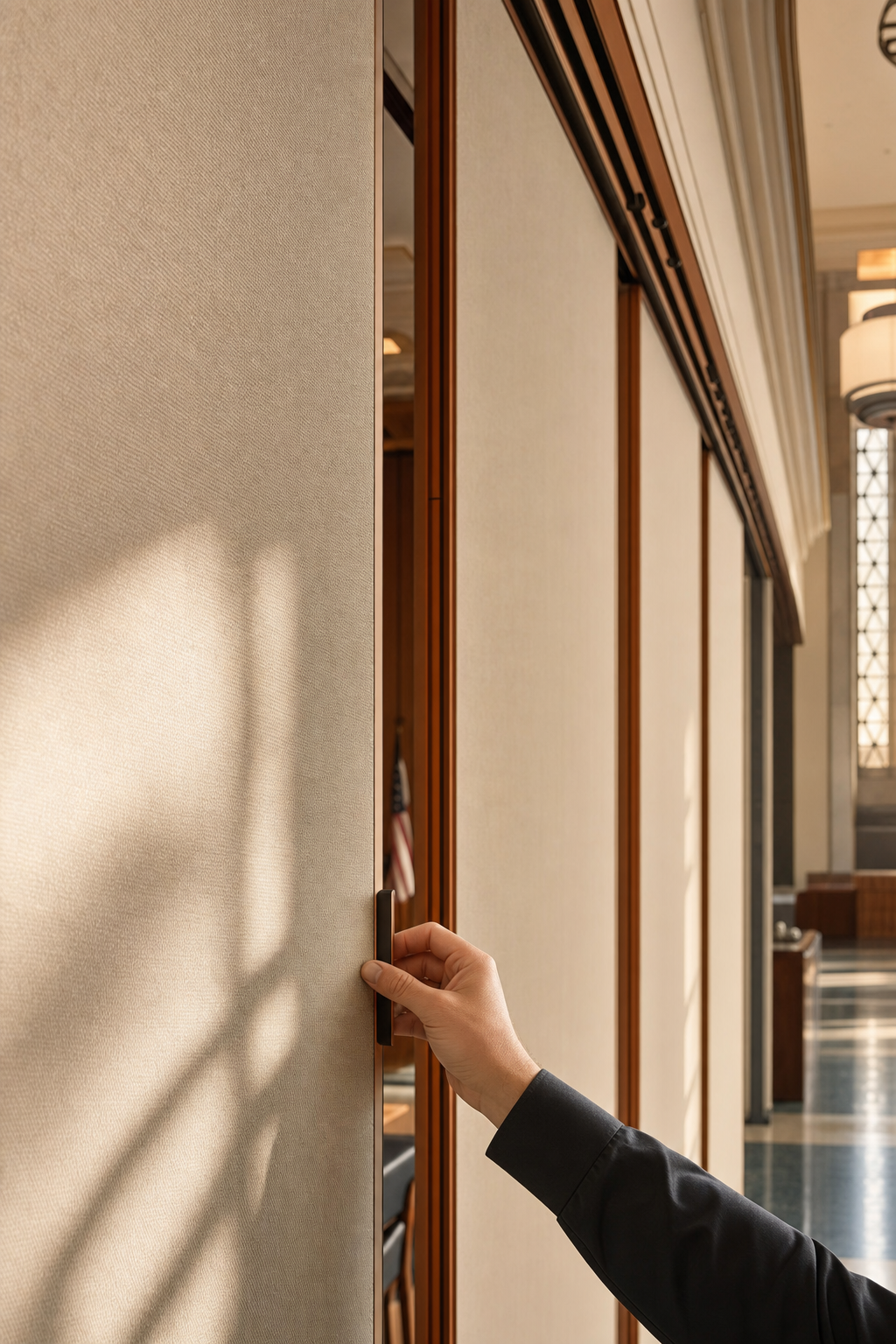
Translating a conceptual floor plan into a technical Bill of Quantities requires a granular understanding of furniture architecture. In a typical modular office workstation Philippines procurement exercise, a complete station is not evaluated as a single item, but rather as an assembly of three structural pillars designed for longevity and adaptability.
The first pillar consists of the Partition Panels, which serve as the structural backbone. High-quality specifications demand extruded aluminum frames that provide a lightweight yet rigid skeleton. The interior cavities accept various infill options, including acoustic fabric for sound absorption, clear or frosted glass for light transmission, and high-pressure laminates for high-impact zones.
The second pillar is the Worksurface. To ensure long-term durability under heavy equipment, the local industry standard dictates Melamine Faced Chipboard (MFC) or High-Pressure Laminate (HPL) tops with a 25mm thickness standard. These surfaces must be finished with 2mm impact-resistant PVC edge banding to prevent moisture ingress and edge chipping over years of daily use.
The third pillar comprises the Support Systems. Buyers must choose between bracket-mounted surfaces, which hook directly into the panel frames to maximize under-desk legroom, and independent steel legs, which offer greater structural autonomy if individual desk layouts need to be separated later.
Beyond these three pillars, integrated wire management systems are critical, especially for IT-heavy setups in government agencies and the BPO sector. High-capacity built-in raceways run through the base or midline of the panels to segregate power and data lines safely, routing them directly to surface grommet holes. Selecting these components accurately through an experienced office furniture supplier ensures the final installation handles modern technological demands while maintaining clean, hazard-free environments.
Technical Specifications for Government and Institutional Bidding
Bidding for institutional projects via PhilGEPS requires a level of precision that satisfies the Revised Implementing Rules and Regulations (IRR) of Republic Act 9184. When drafting technical specifications for government procurement, the goal is to define quality benchmarks that ensure durability without becoming legally restrictive. This balance is achieved by focusing on standardized material measurements and performance certifications rather than brand names.
Panel thickness is the most common variable in DBM and National Museum bid documents. You should typically specify one of three standard widths based on the operational need:
Panel Thickness | Recommended Application |
|---|---|
32mm (Slim) | Visual privacy in space-constrained clerical areas. |
45mm (Standard) | General administrative offices; provides moderate stability. |
60mm (Heavy Duty) | High-traffic zones or IT-intensive stations requiring deep internal cable raceways. |
Durability standards must also address the local climate and high-use nature of public offices. Specify aluminum frames with a powder-coated finish, ensuring a minimum thickness of 60 to 80 microns. This protects the structure against the high humidity levels typical in Philippine facilities, preventing corrosion and paint peeling. Furthermore, fire safety is paramount in institutional settings. Bidders should be required to provide test certifications for fire-retardancy in all fabric components, ensuring they meet flame spread and smoke development standards.
Functionality at the desk level often hinges on grommet hole placement. Rather than leaving this to the supplier, specify 60mm diameter grommets located at the rear corners or center-back of the worksurface. This ensures compatibility with standard monitor arms and CPU wiring. To avoid the pitfall of being 'restrictive,' focus your specifications on these measurable physical properties and international performance standards like BIFMA, rather than proprietary design features. This approach ensures a fair bidding process while guaranteeing the resulting modular system can withstand the rigors of long-term government service.
Standard Dimensions and Space Planning in the Philippine Context

Once the technical specifications are defined, the planning phase must transition to spatial configuration using standard metric measurements. In the local market, the primary driver for modular office workstation Philippines procurement is the optimization of the floor plate. For high-density environments, such as BPO operations or large-scale clerical pools in government agencies, the standard footprint is 1.2m x 0.6m. This dimension provides sufficient surface area for a monitor and keyboard while maintaining a compact layout. Conversely, for supervisory or administrative roles requiring more layout space for documents, a 1.5m x 1.5m L-shaped configuration is the professional standard.
Effective office fit-out services rely on the concept of office density to ensure employee comfort and safety. For a moderately dense Philippine workplace, facility managers should plan for an allocation of 6 to 8 square meters per employee. This calculation accounts for the workstation itself, primary and secondary circulation paths, and access to shared storage or utility areas. Adhering to these density standards helps agencies maintain compliance with occupational health guidelines while preventing the claustrophobic atmosphere often found in poorly planned layouts.
The vertical dimension of the partition panels is equally critical as it dictates the visual and acoustic privacy of the space:
Partition Height | Functional Impact | Recommended Application |
|---|---|---|
1.2 Meters | Maintains visual contact while seated; encourages open communication. | Creative teams and collaborative government procurement projects. |
1.5 Meters | Provides visual privacy when seated; blocks eye contact between stations. | General administrative, accounting, and legal departments. |
1.8 Meters | Full visual privacy even for standing occupants; offers maximum acoustic dampening. | Human Resources and offices handling sensitive or confidential records. |
Price Guide: Estimating Your Modular Workstation Budget
Accurate budgeting for modular office workstation Philippines procurement requires a nuanced understanding of how component choices impact the final bid price. In the current market, a realistic baseline for a cluster-type workstation typically ranges from 10,000 PHP to 20,000 PHP per seat. The entry-level end of this spectrum generally covers a standard 1.2m x 0.6m footprint with full fabric panels and basic structural supports. As the footprint expands to 1.5m or the materials shift toward more durable or aesthetic finishes, the per-unit cost rises accordingly.
Material selection is one of the most significant cost drivers in any fit-out project. While full fabric panels are the most economical choice, upgrading to high-pressure laminates for better wear resistance and easier cleaning generally adds about 10 percent to the unit cost. If your design incorporates glass inserts to improve natural light distribution or visual connectivity, expect an additional 20 percent price increase over the base fabric model. These upgrades enhance the office environment but require careful alignment with the available project budget.
Feature | Estimated Cost Impact | Primary Benefit |
|---|---|---|
Standard Fabric Panel | Base Price | Sound absorption and cost-efficiency |
Laminate Finish | +10% | Durability and ease of maintenance |
Glass Inserts | +20% | Visual transparency and modern aesthetics |
Integrated Cabling | Variable | Safety and organized wire management |
Beyond materials, technical integration and logistics shift the financial requirements. Large-scale government procurement projects often require extensive internal networking and electrical cabling, which increases the price due to the specialized components and labor needed for safe routing. Finally, geographic location affects the bottom line. While pricing is often standardized in the National Capital Region (NCR), projects in provincial areas like Rizal may involve additional delivery and installation fees based on site accessibility and total volume. Working with an experienced office furniture supplier can help clarify these variables during the initial planning phase.
Open Plan vs. Cubicles: Selecting the Right Layout for Your Agency
Selecting the right configuration is as much about operational psychology as it is about the bill of materials. Open-plan layouts are frequently prioritized in creative and commercial sectors to foster spontaneous collaboration. However, the assumption that they are inherently cheaper is often a misconception; these environments require additional investments in acoustic treatments and breakout zones to mitigate noise and distraction.
For traditional government procurement projects, partitioned cubicles remain the standard because they provide the visual and acoustic privacy necessary for deep focus and the handling of sensitive documentation. In the Philippines, the implementation of RA 11058, or the Occupational Safety and Health Standards Act, has accelerated a shift toward hybrid designs. These layouts utilize mid-height partitions to maintain physical distancing and safety while incorporating open, collaborative hub stations for team-based tasks.
Layout Type | Primary Benefit | Best Suited For |
|---|---|---|
Open Plan | High collaboration; flexibility | Creative agencies; fast-paced commercial firms |
Partitioned Cubicles | Focused work; data privacy | Legal, accounting, and administrative agencies |
Hybrid System | Balanced safety and teamwork | Modern government units and large-scale office fit-out services |
Before finalizing modular office workstation Philippines procurement, facility managers should conduct a thorough work-function analysis. This ensures that the chosen furniture follows BIFMA and ANSI standards for ergonomic support while specifically addressing the daily tasks of the personnel. Partnering with an experienced office furniture supplier allows for a phased rollout, ensuring that the transition from traditional to hybrid systems does not disrupt agency operations.
Maintenance and Long Term Care for Modular Systems
The buy-and-forget mentality is a common oversight in high-traffic institutional settings where daily operational demands accelerate wear. For government procurement officers and facility managers, the success of a modular office workstation Philippines procurement project is measured by its longevity, not just the initial handover. Protecting this investment starts with a regular maintenance schedule tailored to the materials used.
Fabric panels require monthly vacuuming and prompt spot cleaning with pH-neutral solutions to prevent permanent staining. Meanwhile, worksurfaces should be wiped with non-abrasive cleaners to preserve the 2mm PVC edge banding and the laminate finish. Beyond aesthetics, structural integrity is paramount. Periodically inspect cantilevered brackets and panel connectors; these components can shift slightly over time under the weight of heavy desktop equipment or through accidental impact.
Selecting an office furniture supplier that offers comprehensive after-sales support is essential. Many projects fail when minor parts, like specific grommet covers or matching fabric infills, become unavailable years later. A partner dedicated to office fit-out services will provide the technical expertise to perform hardware re-leveling and part replacements, ensuring the system remains as stable and professional as it was on day one.
Selecting the right modular workstations involves more than just aesthetics; it requires careful consideration of layout, functionality, and long-term value for your organization. Whether you are outfitting a government office or a commercial space, the right configuration can significantly enhance productivity and employee well-being. If you find the procurement process complex and want expert guidance to ensure your specifications meet every requirement, our team is here to support your journey. You can explore our full range of Office Furniture to find solutions tailored to your unique workspace needs and vision.