Deciding between new vs used office furniture Philippines requires balancing immediate cost savings with long-term ergonomic compliance and warranty coverage. New furniture provides modern modular flexibility and manufacturer guarantees; conversely, used pieces offer significant budget reductions and sustainable procurement options for rapid setups. Companies should weigh their growth trajectory against available capital to choose the best furniture strategy for their specific workspace needs.
Scaling a commercial workspace in the Philippines often forces procurement officers into a difficult compromise between immediate cost savings and long term asset durability. While the initial appeal of surplus furniture is undeniable for a growing budget, the hidden risks of non compliance with local regulations and the rapid degradation caused by our tropical climate can quickly turn a bargain into a liability. Navigating the legal landscape, including the specific requirements of RA 12009, demands a more nuanced approach than simply choosing the lowest bid. This guide provides a comprehensive framework to help you evaluate the trade offs between new, used, and rental office furniture. We will examine the critical balance of warranty protection, sustainability goals, and logistical efficiency to ensure your office investment supports both your operational needs and your regulatory obligations in the Philippine market.
The Philippine Office Furniture Dilemma: Cost vs Compliance
The Philippine office landscape is uniquely volatile. In major business hubs like Quezon City and Taguig, the constant expansion and turnover of BPO firms have flooded the local market with surplus inventory. For many organizations, the allure of high-end ergonomic chairs priced at 40 to 60 percent below retail is significant. However, for entities navigating the complexities of government procurement or institutional standards, the decision between new vs used office furniture Philippines involves much more than a simple price comparison.
Procurement officers must balance immediate budget savings against long term accountability and technical compliance. While a typical office furniture supplier may offer second hand desks at a discount, these units often lack the documentation and warranty support required for strict audit trails. Public sector projects, in particular, must adhere to rigid specifications that used items rarely meet consistently.
This analysis moves beyond retail price tags to examine new, used, and rental furniture through the lens of Return on Investment (ROI). Effective office fit-out services require a framework that accounts for maintenance, structural integrity in tropical climates, and eventual asset retirement. Identifying the best path requires understanding the lifecycle of the asset rather than just the initial procurement cost.
Buying New Office Furniture: Warranty, Customization, and RA 12009
Investing in new assets provides a level of technical precision and legal security that surplus inventory cannot match. Under Republic Act 12009, also known as the New Government Procurement Act, procurement officers are tasked with ensuring transparency, efficiency, and value for money. When sourcing through a specialized office furniture supplier for PhilGEPS bids, new products allow for the creation of exact technical specifications. This ensures that every desk, mobile compactor, or operable partition wall meets the specific structural and safety standards required by the agency, avoiding the ambiguity of as-is conditions common in the used market.
A significant advantage of new procurement lies in the warranty. In the Philippines, the warranty is often a neglected aspect of the initial purchase until a chair gas lift fails or a desk panel warps. New furniture typically carries manufacturer warranties ranging from three to ten years. For government procurement projects, this provides a clear audit trail for maintenance and replacement, shifting the risk from the agency to the supplier. This is a critical distinction in the new vs used office furniture Philippines debate, as used items rarely offer more than a thirty day window of support, if any.
Furthermore, new items offer the benefit of tropicalized materials. The high relative humidity in cities like Manila and Cebu accelerates the degradation of adhesives and steel. New furniture utilizes fresh, factory applied treatments designed to resist moisture, preventing the premature delamination of MFC boards and the oxidation of metal frames. Used furniture, having already spent years in varying office environments, often has compromised structural integrity due to prolonged exposure to local humidity and improper previous maintenance.
Feature | New Office Furniture | Used or Surplus Furniture |
|---|---|---|
Compliance | Fully aligns with RA 12009 and PhilGEPS | Difficult to standardize for formal bids |
Warranty | 3 to 10 years comprehensive | Limited or non-existent |
Material Science | Fresh tropicalized coatings | Degraded moisture resistance |
Customization | Tailored to space and branding | Restricted to available inventory |
This level of control is essential for office fit-out services that prioritize long term operational stability over immediate, superficial savings.
The Appeal of Used and Surplus Office Furniture: Savings and Sustainability
While new furniture offers technical certainty, the secondary market thrives on immediate liquidity and high-end accessibility. The "BPO churn" remains the primary driver of the second-hand market in the Philippines. When multinational firms in Taguig or Makati downsize or upgrade their facilities, they release thousands of high-quality ergonomic chairs and modular workstations into the surplus stream. For a private sector startup, the ability to procure a task chair that normally retails for 18,000 PHP at a 30 to 60 percent discount provides a compelling financial argument for immediate occupancy.
From a sustainability standpoint, choosing surplus furniture supports a circular economy by diverting bulky assets from local landfills. This aligns with modern corporate social responsibility goals and reduces the carbon footprint associated with manufacturing new units. However, the decision in the new vs used office furniture Philippines debate requires assessing long term scalability. A common failure in office fit-out services occurs when a growing company needs ten additional matching desks six months later, only to find the original surplus lot is exhausted, resulting in a fragmented and unprofessional office aesthetic.
Furthermore, purchasing from a surplus office furniture supplier often eliminates the possibility of after-sales maintenance. Unlike the structured support found in government procurement contracts for new items, used units are typically sold as-is. If a batch of second hand mobile compactors develops alignment issues due to previous mechanical wear, the cost of specialized repairs can quickly erode the initial savings. For organizations prioritizing aesthetic consistency and operational uptime, the fragmentation and lack of technical support in the used market present significant logistical hurdles.
Philippine Compliance Rules for Furniture Disposal and Procurement
A significant and often overlooked factor in the new vs used office furniture Philippines debate is the regulatory framework governing the end of an asset's life. Procurement is not merely the act of acquisition; it is a lifecycle commitment that involves strict accountability, particularly for public sector entities and large corporations. In the Philippines, the Commission on Audit (COA) provides the primary framework for this through the Revised Manual on Disposal of Government Properties (2024). This manual dictates that once furniture, such as mobile compactors or modular desks, becomes unserviceable or no longer needed, it must undergo a rigorous inspection, appraisal, and disposal process.
For agencies involved in government procurement, purchasing used items can inadvertently accelerate administrative burdens. Because used furniture is already partially through its mechanical life, it reaches the "unserviceable" threshold faster than new equipment. This triggers the need for a Disposal Committee to conduct public biddings or negotiated sales to offload the assets, a process that requires significant man-hours and documentation to ensure transparency. Selecting new, high-quality furniture allows an organization to maximize the asset's utility period, thereby deferring the complex COA disposal cycle for several additional years.
Beyond government entities, private firms must also contend with Republic Act 9003, also known as the Ecological Solid Waste Management Act. This law places the responsibility of proper waste segregation and disposal on the property owner. Office furniture is classified as bulky waste, meaning it cannot be disposed of via standard municipal collection. Businesses in dense urban hubs must engage accredited haulers and ensure that materials like steel and foam are handled according to environmental standards.
Compliance Pillar | Impact on Procurement Strategy |
|---|---|
COA Revised Manual (2024) | Requires formal appraisal and public bidding for disposal of government assets. |
RA 9003 (Solid Waste Act) | Mandates specialized handling for bulky furniture waste to prevent environmental penalties. |
Asset Registry | New items provide clean documentation for depreciation and eventual retirement audits. |
When planning office fit-out services, understanding these rules is essential. A compliance-aware partner evaluates not just the initial cost, but how the physical durability of the furniture aligns with these local legal requirements. Choosing furniture with a longer lifecycle reduces the frequency of these disposal hurdles, ensuring that the organization remains compliant with both audit and environmental laws for the long term.
Rental Office Furniture: A Flexible Alternative for Startups and Projects
While the debate usually centers on ownership, rental furniture offers a strategic middle ground for businesses that prioritize agility. This model is particularly effective for Philippine entities operating on fixed term contracts, such as project based engineering firms or BPO startups testing new sites in regional hubs. By opting for a rental agreement through a specialized office furniture supplier, companies can bypass the heavy capital expenditure associated with new furniture while avoiding the maintenance risks inherent in used stock.
For PEZA-registered enterprises, furniture rentals simplify asset management significantly. Moving owned equipment into or out of economic zones involves specific Bureau of Customs and PEZA documentation; rental agreements often shift these logistical burdens and the responsibility for asset tracking to the provider. Furthermore, choosing a rental model solves the compliance issues discussed previously. Since the furniture remains the property of the service provider, the client organization is not subject to COA disposal protocols or the environmental liabilities of RA 9003 at the end of the project. Instead of managing the complex retirement of office fit-out services assets, the firm simply schedules a pickup. This flexibility makes rental a compelling contender in the new vs used office furniture Philippines landscape, especially for institutional projects requiring rapid mobilization without long term administrative weight.
The Tropical Factor: Why Quality Matters for Longevity in the Philippines
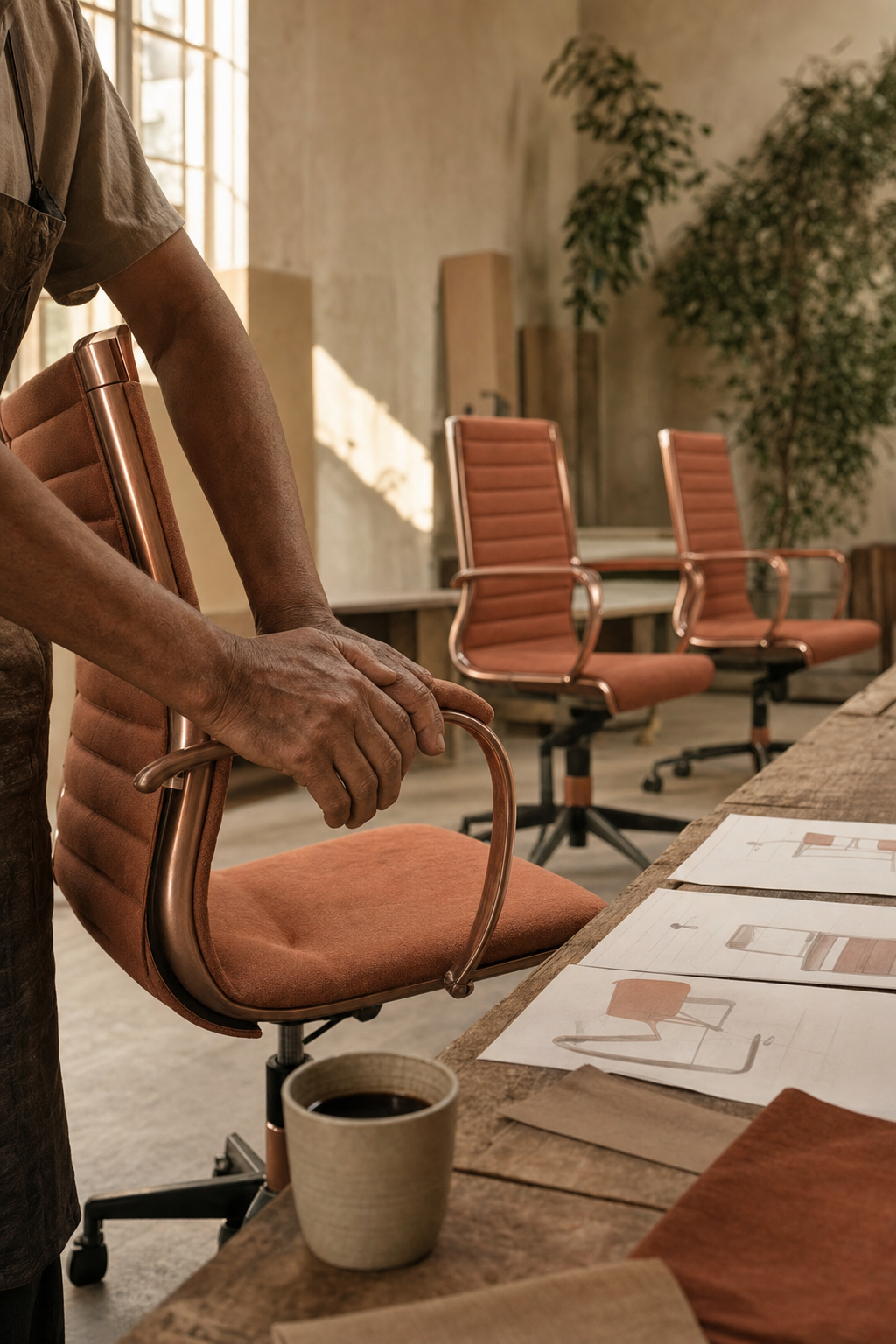
In the Philippine archipelago, environmental stressors dictate the lifespan of interior assets as much as daily use does. High relative humidity and saline air, particularly in coastal business districts, act as catalysts for material failure. When evaluating new vs used office furniture Philippines, the hidden cost of pre-owned items often manifests as compromised material integrity. Used Melamine Faced Chipboard (MFC) desks frequently suffer from delamination, where moisture penetrates the core, causing the board to swell and the decorative edges to peel. Similarly, cheap steel components in second-hand mobile compactors or chair bases that have spent years in poorly ventilated storage may already harbor internal oxidation, leading to eventual structural fatigue.
Beyond the frame, seat foam in older ergonomic chairs often undergoes chemical degradation or mold accumulation due to trapped moisture, losing its rebound capacity and support. RA Integrated Solutions addresses these tropical challenges by sourcing products with industrial-grade edge banding and specialized powder-coated finishes that provide a robust moisture barrier. By integrating these maintenance-friendly specifications into office fit-out services, we ensure that products like operable partition walls remain functional despite the local climate. This focus on material science ensures that government procurement officers and facility managers receive assets capable of surviving their full depreciable life without the need for premature, costly replacements.
Decision Matrix: Which Path Should Your Business Choose?
Final selection depends on the intersection of capital availability, compliance requirements, and the expected lifecycle of the facility. For government procurement, new assets remain the only viable path to satisfy PhilGEPS transparency and COA asset tracking. Conversely, the used market offers a strategic entry point for small businesses requiring high-end ergonomic seating without the initial retail burden.
Business Profile | Recommended Path | Primary Product Focus | Decision Driver |
|---|---|---|---|
Government & Institutions | New | Mobile compactors, operable walls | Full RA 12009 compliance and audit-ready warranties. |
Bootstrapped Startups | Used | Brand-name ergonomic chairs, desks | Immediate 30 to 60 percent CapEx savings for initial launch. |
Project-Based & PEZA Firms | Rental | Standard workstations, basic storage | Zero disposal liability under RA 9003; high operational agility. |
Institutional Facilities | New | Tropicalized MFC desking, steel storage | Resistance to humidity and long-term material integrity. |
When engaging an office furniture supplier for office fit-out services, assess the total cost of ownership rather than the sticker price. If the project requires specialized technical systems like heavy-duty mobile compactors, the mechanical precision of new manufacturing outweighs the savings of used units. For firms navigating the new vs used office furniture Philippines landscape, the priority must always be how the asset supports operational uptime and legal accountability over its entire lifespan.
Deciding between new and pre-owned assets requires a careful balance of budget, compliance, and functionality. While used pieces offer immediate savings, new items provide warranties and meet modern ergonomic standards. If you want expert help navigating these complex procurement choices, RA Integrated Solutions is here to guide you. We specialize in helping businesses find the ideal Office Furniture that aligns with both operational needs and local regulations. Let us assist you in creating a workspace that supports your team and your long-term business growth.