Standard library furniture and shelving Philippines should feature shelving heights between 180 and 200 centimeters and depths of 25 to 35 centimeters to ensure optimal storage capacity. Procurement requires sourcing durable, specialized pieces from local manufacturers or reputable suppliers to meet specific educational facility standards and maximize space efficiency.
Designing or upgrading a library in the Philippines often involves navigating complex procurement rules and specific environmental challenges. Institutional buyers frequently struggle to find furniture that balances modern aesthetics with the rigorous durability required for heavy public use. Choosing the wrong shelving can lead to non-compliance with national standards or rapid deterioration due to local humidity. At RA Integrated Solutions, we understand that a library is a specialized environment demanding precision in both design and material selection. This guide provides a comprehensive overview of essential specifications for library furniture and shelving in the Philippines. You will discover critical dimensions for standard units, compliance requirements for DepEd and the National Library, and expert advice on selecting materials that withstand the tropical climate. We also explore maximizing floor space through high-density storage solutions to ensure your institution achieves long-term functionality.
The Evolution of Library Spaces in the Philippines
Library design in the Philippines is undergoing a significant transformation. Historically, institutional libraries served as quiet repositories or book warehouses where the primary goal was passive storage. Today, schools and government institutions are reimagining these environments as active learning hubs. This shift requires a strategic approach to library furniture and shelving Philippines markets now demand, moving away from static layouts toward flexible, multi-functional zones.
In RIZ, PH, and across the archipelago, the requirements for these spaces vary significantly. Large-scale educational projects involve high-capacity university archives that demand structural integrity, while local community reading centers prioritize accessibility and comfort. This evolution has also changed the material landscape. While traditional wooden aesthetics still hold a place in executive or private collections for their warmth, modern fit-outs increasingly favor flexible steel systems. These modular steel solutions offer the durability needed for high-traffic public use and the adaptability to reconfigure spaces as collections grow or digital media integration increases.
For government procurement officers, selecting the right system means balancing these traditional needs with the operational realities of modern institutional service. The move toward steel-based cantilever systems and mobile storage reflects a broader commitment to longevity and space efficiency in the modern Philippine library.
Standard Dimensions for Library Shelving in CM and Meters
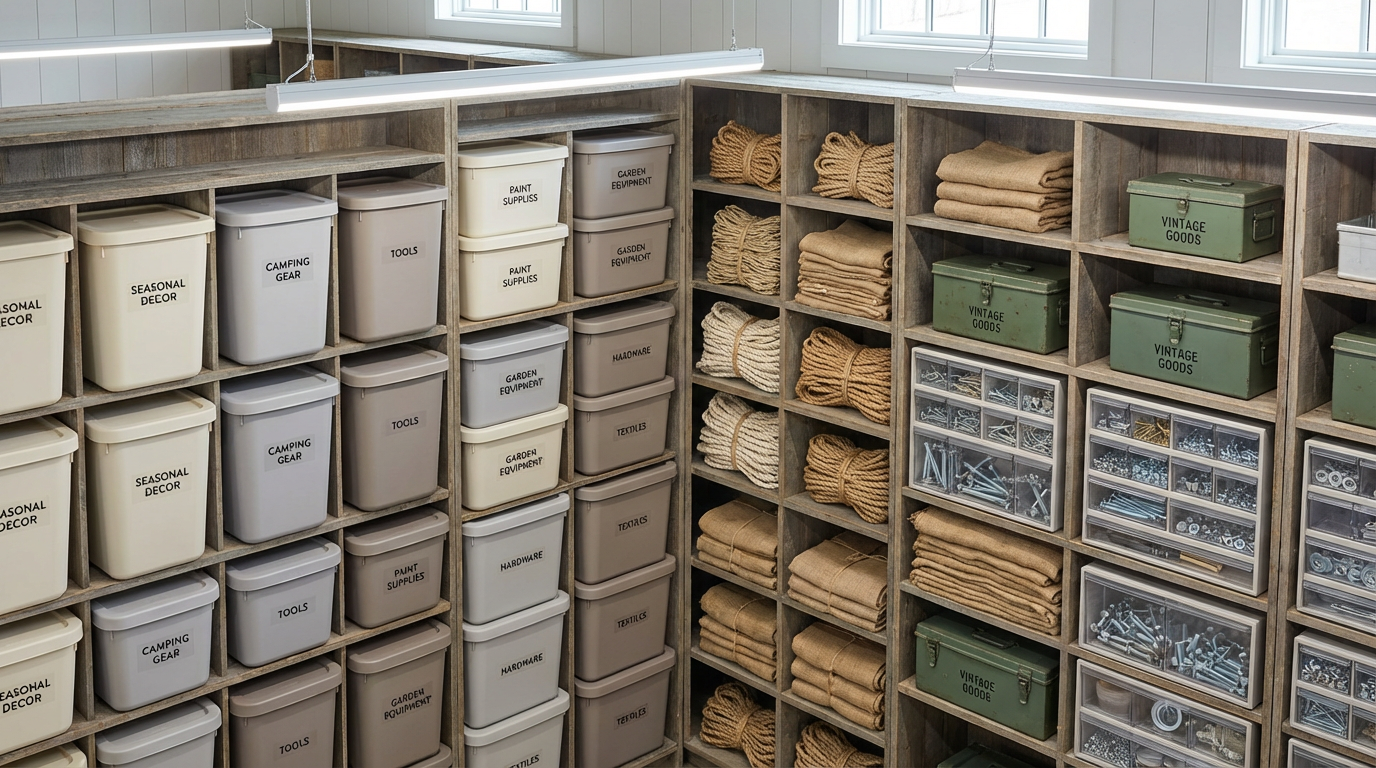
Transitioning from traditional layouts to modern systems requires precise spatial planning. Successful implementation of library furniture and shelving Philippines institutions can rely on depends heavily on adhering to standardized metric dimensions. These measurements ensure that the furniture is compatible with architectural blueprints while remaining functional for the end user. When specifying units, procurement officers must consider the physical footprint of each shelving bay to optimize floor area and maintain safety standards.
A standard single shelving unit, often referred to as a bay, follows a specific set of dimensional ranges to balance storage capacity with structural stability. The table below outlines these common industry specifications:
Component | Standard Metric Range | Application Notes |
|---|---|---|
Unit Width | 80 to 100 cm | Prevents shelf sagging under heavy paper loads. |
Unit Depth | 25 to 35 cm | Accommodates everything from paperbacks to large reference volumes. |
Standard Stack Height | 180 to 200 cm | The baseline for university and general public stacks. |
Selecting the appropriate height grade is critical for both accessibility and the visual environment of the facility. Shelving typically falls into three categories. Low shelving, measuring 90 to 120 cm, is an essential requirement for elementary school libraries and other educational projects. These shorter units maintain clear sight-lines for supervision and ensure that younger children can reach materials safely. Medium shelving, ranging from 150 to 180 cm, serves as an effective mid-point for high schools or community centers.
Tall shelving, standing between 200 and 240 cm, is best suited for adult research libraries and specialized archives where vertical space must be maximized. In these high-density environments, tall stacks provide the necessary volume for extensive collections, though they require careful consideration regarding aisle width and lighting placement. For institutions managing massive records, these dimensions often serve as the foundation for more advanced systems, such as a mobile compactor, which further refines how these standard depths and widths are utilized in a confined footprint.
DepEd and National Library Compliance for School Furniture
While dimension standards provide a blueprint for physical space, institutional compliance determines the legality and longevity of an installation. For public and private institutions, the framework for library development is anchored in DECS Order No. 6 s. 1998. This mandate requires the establishment of functional libraries across all elementary and secondary levels, emphasizing that physical facilities must support a conducive learning environment. Procurement officers managing school budgets are tasked with ensuring that library furniture and shelving Philippines regulations are strictly followed, particularly regarding safety and durability.
Alignment with the National Library of the Philippines (NLP) is equally critical. The NLP provides specific guidelines on furniture ergonomics and materials to ensure they withstand the rigors of heavy institutional use. These specifications often dictate the load bearing capacity of steel shelving and the non-toxic nature of powder-coated finishes. In government procurement, ignoring these standards can lead to structural failures or non-compliance during project audits. Compliance is not merely a formality; it is a safeguard for the students and researchers who interact with these heavy structures daily.
RA Integrated Solutions specializes in navigating these regulatory landscapes for various educational projects. By providing products that meet or exceed DepEd and NLP standards, the focus remains on long-term value rather than short-term cost savings. This expertise ensures that every installation, from a localized reading center to a large-scale university stack, adheres to the mandated safety protocols and structural requirements necessary for public service. This foundation of compliance ensures that the shelving systems can safely transition into more advanced configurations, such as high-density storage solutions, without compromising institutional integrity.
High Density Storage: Mobile Library Shelving and Compactors
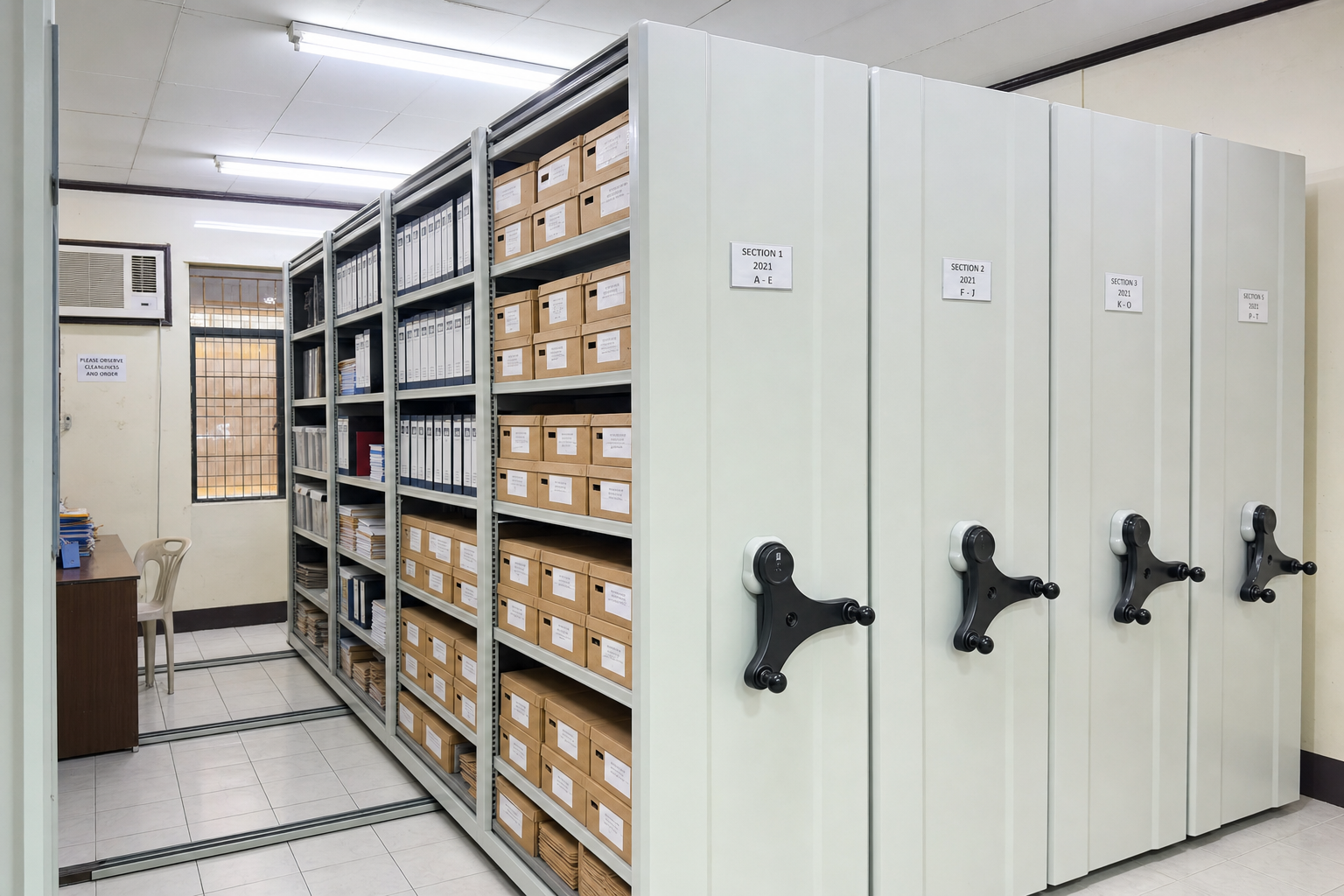
Adhering to institutional standards ensures safety, but it does not solve the challenge of finite floor space. For university archives and government record centers where collection growth outpaces architectural capacity, high-density storage becomes a necessity. A mobile compactor system eliminates the need for multiple permanent aisles by mounting shelving units on a rail-guided track. By creating a single, movable access aisle, these systems can improve space utilization by up to 90 percent compared to traditional fixed layouts.
In the context of library furniture and shelving Philippines buyers typically choose between manual and electric configurations. Manual systems use a mechanical-assist hand-crank to move thousands of kilograms with minimal physical effort, offering a cost-effective and reliable solution for long-term storage. Electric systems utilize push-button interfaces and integrated safety sensors, making them ideal for high-access collections where speed and modern ergonomics are prioritized.
The humid tropical climate of the Philippines introduces specific risks to paper-based collections, including mold growth and accelerated acidic degradation. To combat this, professional-grade compactors are fitted with dust-proof seals along the unit perimeters. These seals create a barrier when the system is closed, protecting sensitive archives from environmental particulates and moisture fluctuations. Furthermore, given the seismic profile of the region, integrated anti-tilt mechanisms are essential safety components. These floor-anchored stabilizers prevent units from tipping during operation or during a tectonic event, ensuring that both the valuable records and the personnel accessing them remain secure.
Essential Library Furniture: Beyond the Bookshelf
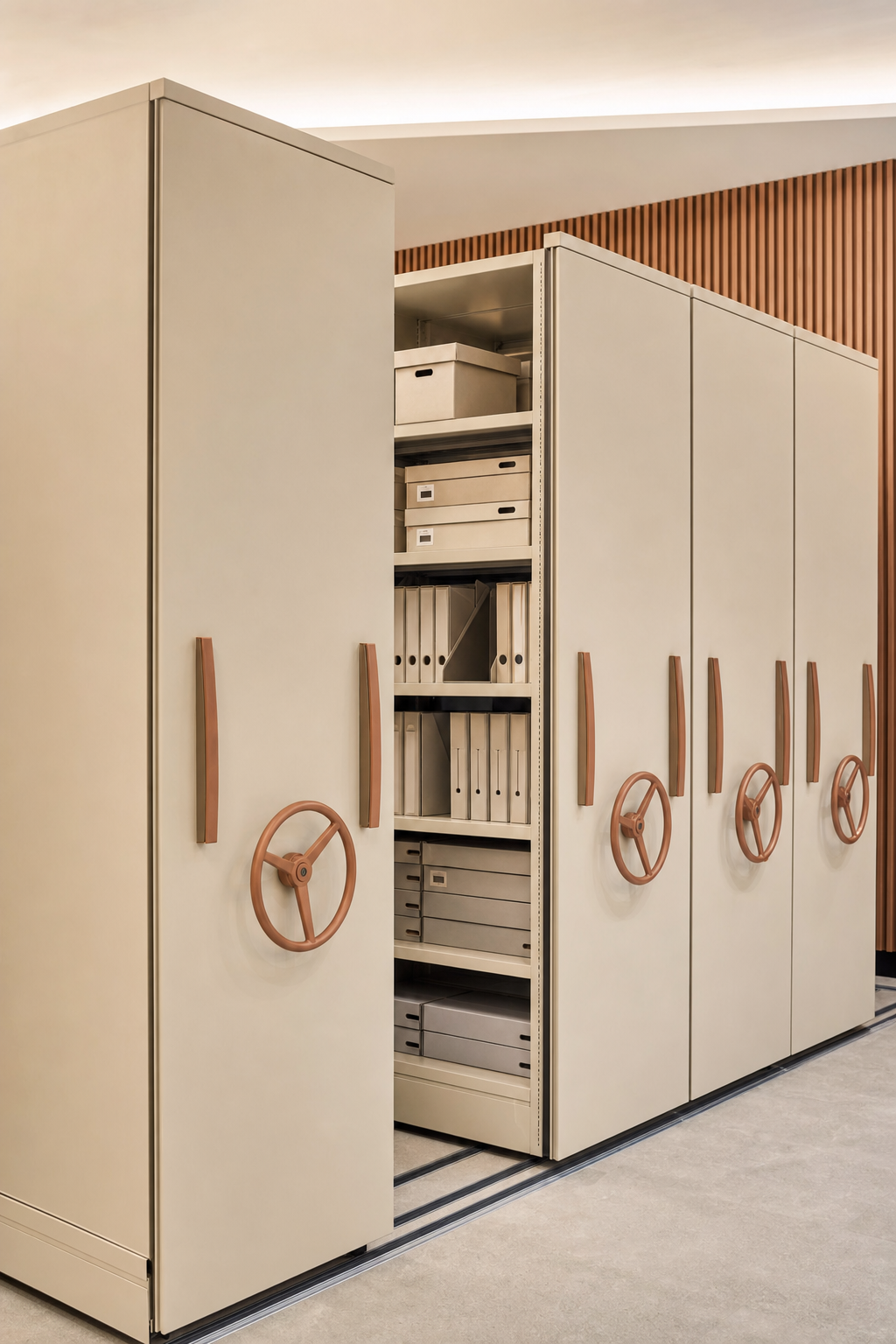
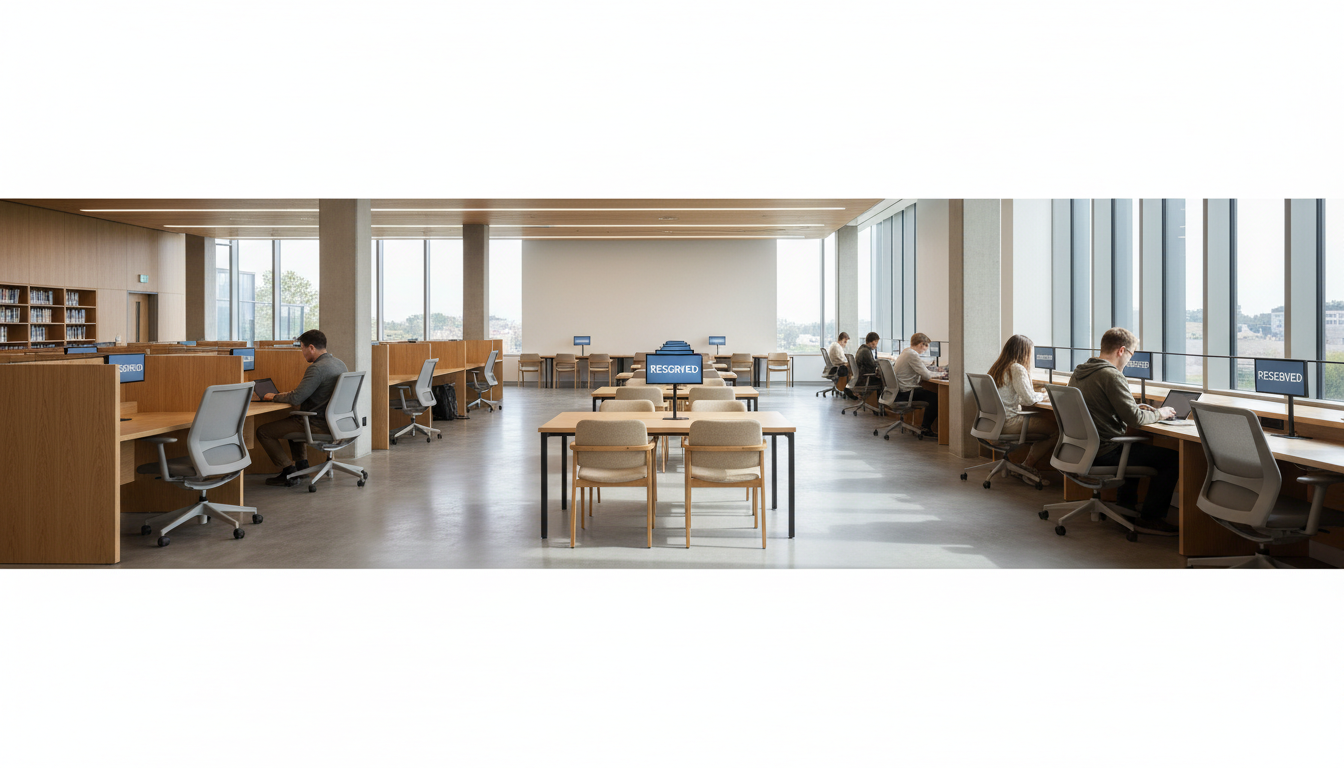
A complete installation requires more than just storage; it demands a cohesive environment where users can effectively engage with information. In many library furniture and shelving Philippines projects, the focus expands to integrated sets that include reading tables, study carrels, and specialized display units. For communal areas, standard reading tables for educational projects typically measure 120 cm by 90 cm to accommodate four people, or 180 cm by 90 cm for a six person configuration. These surfaces must be finished with high pressure laminate to resist scratches and daily wear in high traffic institutional settings.
Individual research requires a different structural approach. Study carrels provide the necessary acoustic and visual privacy for focused work, featuring raised side and front panels. When paired with ergonomic library seating that supports the lumbar spine, these stations facilitate long hours of academic research. To complete a professional facility, specialized items like tiered magazine racks and slanted newspaper display stands are essential for organizing non book media. RA Integrated Solutions prioritizes heavy duty materials, such as reinforced steel frames and impact resistant edging, to ensure these pieces withstand the rigors of constant public use. This attention to detail ensures that furniture sets remain functional and professional, aligning with the quality standards expected in government procurement environments.
Material Selection: Steel vs. Wood in the Philippine Climate
Selecting the right material for library furniture and shelving Philippines installations is a decision largely dictated by environmental durability. In the local tropical climate, traditional wood often faces significant structural challenges. Uncoated or poorly treated timber is highly susceptible to termite infestations, warping from fluctuating humidity levels, and mold growth in poorly ventilated stacks. Consequently, powder coated steel has become the primary choice for large scale educational projects. High grade steel systems provide superior load bearing capacity and are naturally impervious to pests and moisture, ensuring that the structural integrity of the shelving remains intact for decades without the risk of rot.
Wood still maintains a specialized role in institutional design, particularly for executive suites, specialized law libraries, or private heritage collections where a sense of prestige and warmth is required. To achieve a balance between long term durability and classic aesthetics, modern fit outs often utilize a hybrid approach. This involves using heavy duty steel for the internal shelving framework and uprights while incorporating wooden end panels and top caps. This strategy satisfies the rigorous requirements of government procurement for longevity and maintenance while providing the sophisticated, inviting atmosphere necessary for a high end research environment.
Procurement and Installation Tips for Institutional Buyers
Bids and Awards Committees (BAC) must look beyond initial unit costs to evaluate the total lifecycle value of library furniture and shelving Philippines installations. When drafting technical specifications, procurement officers should explicitly require certificates of structural integrity and load tests. A common oversight in government procurement is the omission of professional installation from the contract. Unlike retail platforms where products arrive as unassembled parts, institutional shelving requires expert leveling. In many Philippine buildings, floors are rarely perfectly flat; if a stack is not plumb, the center of gravity shifts, creating a significant tipping hazard once the shelves are fully loaded.
RA Integrated Solutions addresses these logistical pain points by providing end to end delivery and precision installation. This service includes anchoring systems to the floor or wall and ensuring all mobile compactor tracks are calibrated for smooth operation. For long term maintenance, committees should schedule annual inspections to tighten fasteners and check structural alignment, particularly after local seismic activity. Choosing a partner that handles the entire fit out for educational projects prevents the safety risks and warranty voids associated with the DIY assembly often found in consumer grade retail orders.
Selecting the right library furniture involves balancing durability with functionality to create an inviting environment for readers. Whether you are outfitting a school or a corporate space, understanding technical specifications ensures your investment lasts for years. If you find the procurement process overwhelming, working with a consultant can simplify the journey. RA Integrated Solutions, a brand of Rootstone Approach Furniture Trading, offers specialized Office Furniture solutions designed to meet specific requirements. If you want expert help in choosing the perfect shelving, our team is here to support your project.