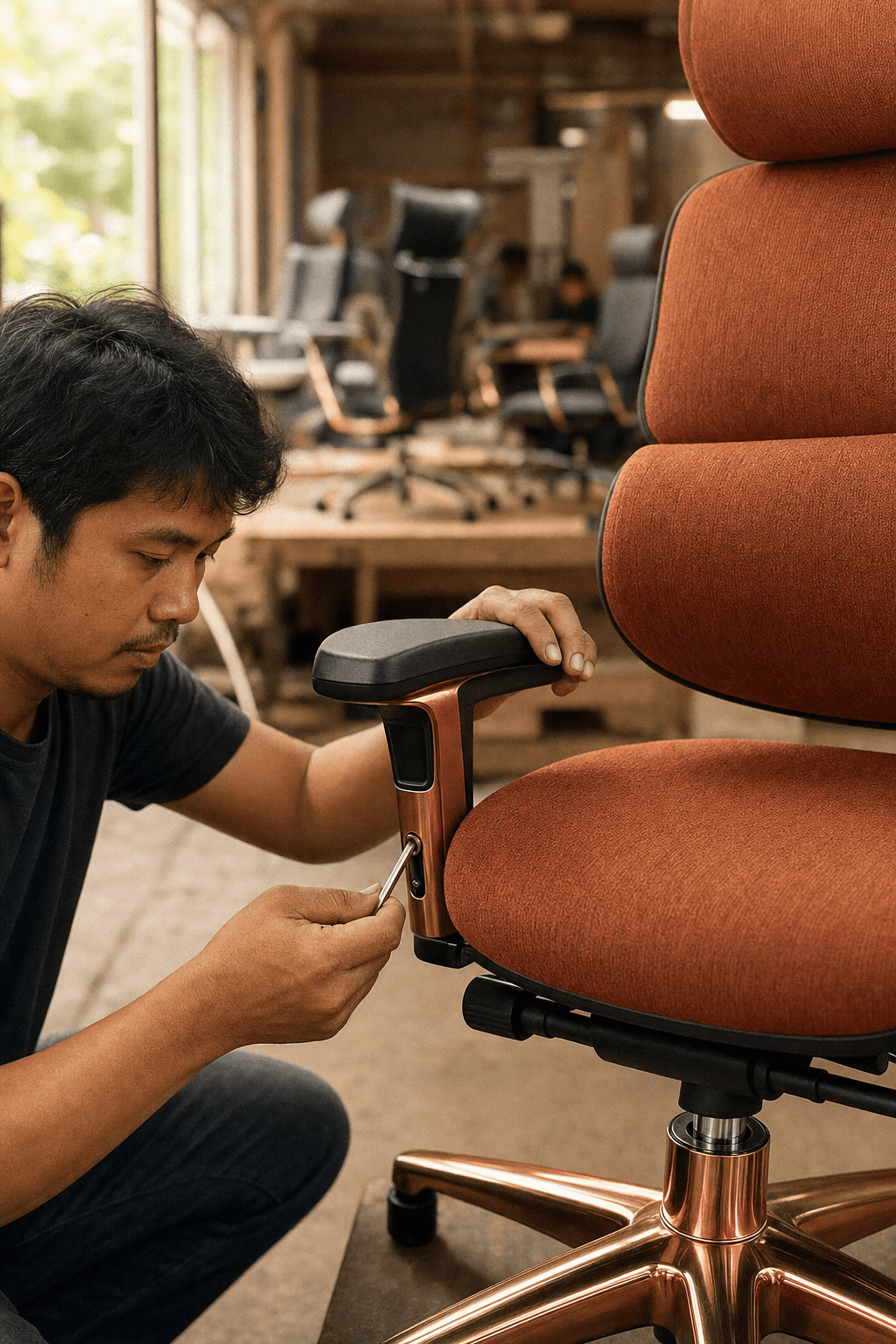
Procuring quality office chairs requires prioritizing ergonomic features like adjustable lumbar support and height while ensuring all units meet BIFMA safety and durability standards. This office seating Philippines procurement specification guide highlights the importance of conducting rigorous supplier testing and adhering to local government or corporate procurement practices to maximize long term value.
Procuring office furniture in the Philippines often involves navigating a sea of aesthetically identical options that vary wildly in durability and ergonomic support. For procurement officers and facility managers, the true challenge lies in distinguishing a chair that merely looks professional from one that can withstand the rigorous demands of a tropical business environment. A misstep in technical specifications can lead to premature structural failures, employee discomfort, and costly replacement cycles that strain annual budgets. At RA Integrated Solutions, we understand that effective procurement requires a rigorous, standards-based approach. This guide provides a comprehensive framework for specifying task, ergonomic, and executive seating. You will learn how to navigate ANSI;BIFMA standards, select materials suited for local humidity, and draft precise specifications for institutional or government bidding. By the end of this article, you will have the technical expertise to secure seating solutions that balance longevity with executive-grade comfort.
The Strategic Importance of Office Seating in Philippine Workspaces
In the evolving landscape of Philippine workspaces, office chairs have transitioned from simple furniture items to critical productivity tools and health investments. Modern government procurement and high-density BPO operations now recognize that a chair directly influences employee performance and long-term musculoskeletal health. This shift toward high-quality institutional standards reflects a growing sophistication in how organizations source their assets, moving away from disposable options toward performance-driven systems.
RA Integrated Solutions, a brand of Rootstone Approach Furniture Trading, supports this transition by providing expert trading, supply, delivery, and installation of advanced seating systems. We understand that a primary pain point for procurement officers in RIZ and across the Philippines is the tension between the initial unit price and the Total Cost of Ownership (TCO). While budget-grade chairs may appear cost-effective on a purchase order, their rapid degradation in 24/7 environments often leads to frequent replacements, disposal costs, and maintenance downtime.
Choosing the right office furniture supplier involves looking beyond the sticker price to evaluate the office seating Philippines procurement specification guide. By focusing on robust technical specifications, organizations can secure furniture that serves as a durable asset rather than a recurring expense. High-quality seating minimizes liability and ensures compliance with local safety standards, making it a strategic pillar of any professional interior project.
Understanding ANSI:BIFMA Standards for Philippine Institutional Buyers
Navigating the technical requirements within an office seating Philippines procurement specification guide requires a clear understanding of the ANSI/BIFMA X5.1 standard. Developed by the Business and Institutional Furniture Manufacturers Association, this standard establishes specific tests for safety, durability, and structural integrity. For Philippine government agencies like the GSIS or the DBM, requiring BIFMA standards ensures that the furniture can withstand the rigors of high volume public service environments. These standards include grueling assessments such as the 102 kg drop test and 100,000 cycles of seat and back durability testing, simulating years of intensive use.
It is vital for procurement officers to distinguish between BIFMA compliant and BIFMA certified products. A compliant chair is often one where the manufacturer claims to meet the standards through internal testing. In contrast, BIFMA certified products are typically verified through independent laboratories and listed in official registries. For institutional projects, prioritizing certified options provides a higher level of assurance and accountability.
Feature | ANSI/BIFMA X5.1 Standard Detail |
|---|---|
Load Testing | Functional load and proof load tests for backrests and arms. |
Durability | 100,000 cycles for swivel and tilt mechanisms. |
Stability | Front and rear stability tests to prevent tipping. |
Safety | Drop tests to ensure structural integrity under sudden weight. |
Adhering to these international benchmarks protects the organization from liability under Republic Act No. 11058, otherwise known as the Occupational Safety and Health Standards Act. By providing seating that meets these rigorous safety protocols, employers demonstrate a commitment to a safe working environment, effectively mitigating the risk of workplace injuries. This technical diligence is a core component of professional office fit out services, ensuring that every asset purchased contributes to a sustainable and compliant workspace.
Task Chair vs Ergonomic Chair: Defining the Procurement Scope

Defining the procurement scope requires distinguishing between a basic task chair and a high-performance ergonomic chair. A task chair is a minimalist seating solution designed for short-duration activities, typically four hours or less. These are ideal for touchdown stations, meeting rooms, or small satellite offices where users are mobile. Conversely, an ergonomic chair is a precision-engineered tool intended for full eight-hour workdays or rotating shifts. In the Philippine context, particularly for BPO hubs and government clerical roles, ergonomic chairs are the non-negotiable standard to maintain workforce health and operational efficiency.
When evaluating an office seating Philippines procurement specification guide, look for the density of adjustment points. A standard task chair might only offer height adjustment and a fixed back, whereas an ergonomic chair allows the user to tailor the seat to their specific body proportions. This level of customization is what reduces the risk of musculoskeletal disorders in intensive work environments. For government procurement officers, specifying the correct category prevents the common error of purchasing low-profile seating for high-intensity administrative roles.
Adjustment Point | Task Chair Specification | Ergonomic Chair Specification |
|---|---|---|
Seat Depth | Fixed position | Adjustable (Slide mechanism) |
Lumbar Support | Basic contouring | Height and tension adjustable |
Armrests | Fixed or T-arm | 3D or 4D (Height, width, depth, pivot) |
Tilt Mechanism | Simple center tilt | Synchronous or weight-sensitive tilt |
For procurement managers, the distinction is vital because a task chair specified for a permanent desk will likely fail the durability and comfort requirements of a full-time employee. Professional office fit out services prioritize ergonomic seating for primary workstations while reserving task chairs for secondary, low-utilization areas. Selecting a qualified office furniture supplier ensures that these functional differences are clearly defined before the final purchase order is issued.
Technical Specifications for Executive and Management Seating
Executive and management seating requires a balance between aesthetic prestige and technical performance. In Philippine corporate culture, high-back chairs are traditionally preferred for leadership roles to signify authority, yet professional office fit out services prioritize that these visual cues do not compromise ergonomic integrity. For executive applications, the seat cushion should consist of high-density molded foam with a minimum density of 55kg/m³ to prevent bottoming out, while the backrest should utilize a high-tensile, breathable mesh. This mesh is a critical inclusion in any office seating Philippines procurement specification guide to facilitate airflow and manage heat buildup in local tropical conditions.
When drafting requirements for an office furniture supplier, procurement officers should mandate a synchronous tilt mechanism. This allows the backrest and seat to tilt at a 2:1 ratio, which keeps the feet flat on the floor while reclining and maintains the user’s focal point.
Component | Executive Specification Requirement |
|---|---|
Backrest | High-back with integrated or adjustable lumbar support |
Mechanism | Multi-position lock synchronous tilt with tension control |
Foam Quality | High-density cold-cured molded foam |
Weight Capacity | 120kg to 150kg for institutional durability |
Base Material | Die-cast aluminum alloy or reinforced nylon (BIFMA rated) |
For government procurement and institutional tenders, specifying a weight capacity of 120kg to 150kg is essential. This ensures the chair exceeds standard consumer limits and provides a safety margin that reflects the long-term durability required for professional assets.
How to Write an Office Seating Specification for Government Bidding
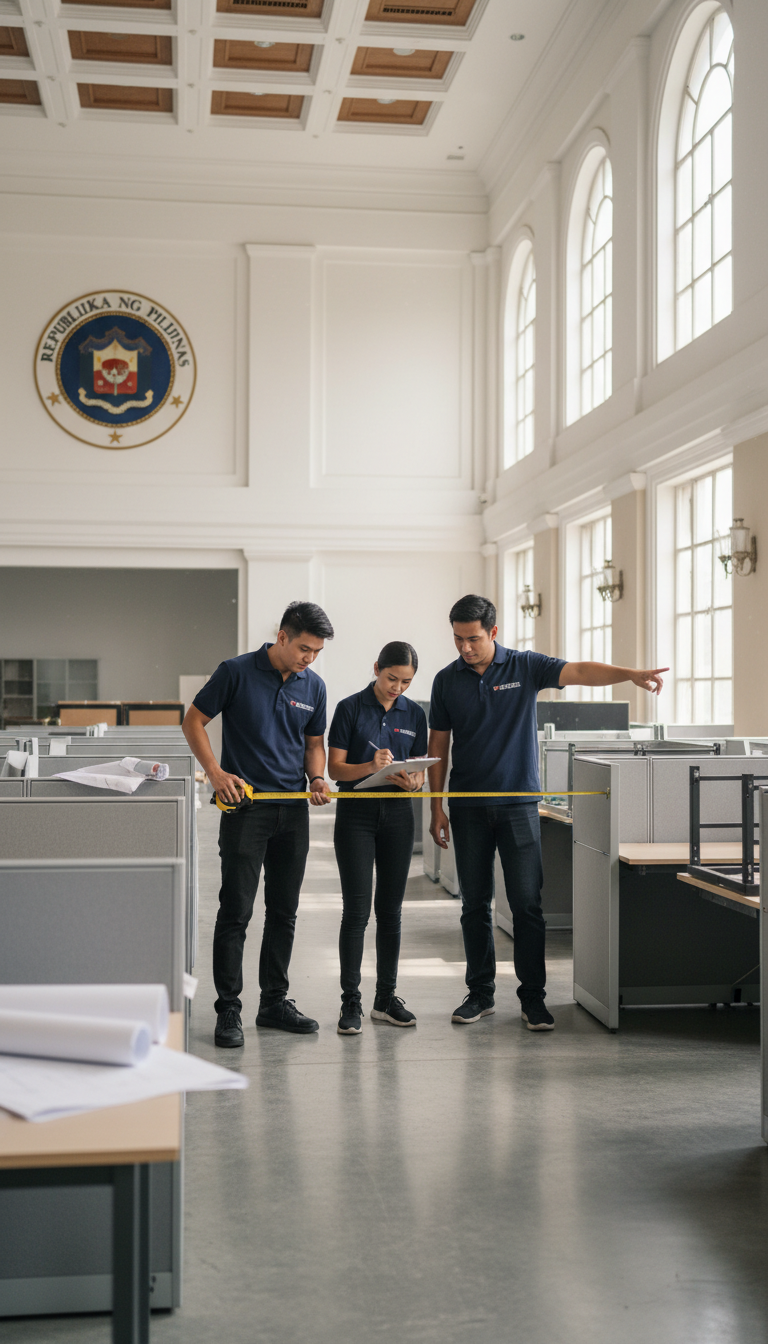
Drafting for Bids and Awards Committees (BAC) requires technical precision to avoid substandard deliveries and potential legal protests. When developing an office seating Philippines procurement specification guide, focus on the mechanical heart of the chair: the gas lift. Specify a "Class 4 pneumatic cylinder" rather than a generic gas lift. Class 4 cylinders feature thicker steel walls and higher pressure resistance, making them essential for high-density institutional use compared to the thinner Class 2 or 3 alternatives often found in retail markets.
Base materials should be clearly defined to match the intended load and environment. For standard clerical roles, a 660mm reinforced nylon base provides a durable, cost-effective standard. For executive tiers, specify a die-cast aluminum alloy base with a polished or powder-coated finish. Caster selection is another frequently overlooked detail; require twin-wheel Polyurethane (PU) casters for hard surfaces like tiles or laminates to prevent floor damage, while reserving nylon casters specifically for carpeted zones.
Component | Recommended Specification Phrasing |
|---|---|
Gas Lift | Class 4 gas lift, BIFMA certified, minimum 100mm travel |
Base | 5-star reinforced nylon or aluminum alloy, minimum 660mm diameter |
Casters | 60mm PU-wrapped casters for hard floors; Nylon for carpet |
Scope | Supply, Delivery, and Professional Onsite Installation |
A robust tender should always include "Supply, Delivery, and Installation" within the scope of work. Purchasing chairs in a knockdown state and relying on general maintenance staff for assembly can lead to improper tensioning and voided warranties. Specifying professional installation ensures that the office furniture supplier remains fully accountable for the structural integrity of the asset. RA Integrated Solutions assists agencies in aligning these technical requirements with budget realities, ensuring compliance with both COA guidelines and government procurement law while maintaining the standards expected from professional office fit out services.
Material Selection for the Philippine Climate: Mesh vs Fabric vs Leather
Selecting upholstery materials requires careful consideration of the Philippine climate, where high humidity and ambient heat can accelerate wear and affect user comfort. For high-density open-plan offices, breathable mesh is the recommended standard for backrests. Mesh allows for passive airflow and heat dissipation, which is vital in maintaining thermal comfort during long shifts, particularly in environments where air conditioning may fluctuate. This material choice is a staple in any robust office seating Philippines procurement specification guide because it combines durability with physiological benefits.
While fabric remains popular for its tactile comfort and color variety, it presents challenges regarding moisture absorption and hygiene. In modern hybrid environments, sanitizing office chairs becomes a logistical priority; porous fabrics are harder to deep-clean compared to non-porous alternatives. For executive applications where prestige is paramount, leather or high-grade synthetic leather (PU) is often specified. However, procurement officers must ensure these materials are high-quality to prevent peeling, a common failure in tropical climates. RA Integrated Solutions provides expert guidance within office fit out services to ensure the selected materials align with the facility's maintenance capabilities and cooling infrastructure.
Material | Best Application | Advantage | Limitation |
|---|---|---|---|
Breathable Mesh | Staff and Task Seating | Superior airflow and cooling | Less plush feel |
Commercial Fabric | Training and Side Chairs | High comfort and acoustics | Harder to sanitize; traps dust |
Synthetic/PU Leather | Management and Executive | Professional aesthetic; wipeable | Prone to peeling in high humidity |
Genuine Leather | Boardroom and Executive | Long-term durability and status | Requires regular conditioning |
A Procurement Checklist: 5 Questions Before You Approve the PO

Finalizing a purchase order requires moving beyond material aesthetics to verify the operational reliability of the assets. Before approving any procurement for office seating, managers should utilize this checklist to ensure compliance with the office seating Philippines procurement specification guide.
Checklist Item | Critical Verification Point |
|---|---|
Standards Compliance | Does the chair meet ANSI/BIFMA X5.1 for structural integrity? |
Warranty Scope | Is the warranty local and inclusive of onsite labor and parts? |
Physical Evaluation | Did the office furniture supplier provide a sample for a 'sit test'? |
Flooring Compatibility | Are casters appropriate (PU for hard floors, Nylon for carpet)? |
Vendor Experience | Does the supplier have a track record in government procurement? |
The final decision should always account for the lifecycle of the product. Beyond the initial delivery, after-sales maintenance is crucial for protecting the organization's investment. RA Integrated Solutions offers dedicated maintenance programs as part of our professional office fit out services, ensuring that every chair remains a safe, productive tool for years to come. By addressing these five questions, procurement officers can secure furniture that meets institutional standards while optimizing the total cost of ownership.
Selecting the right seating involves balancing ergonomic standards with the specific functional needs of your staff. Whether you are outfitting a collaborative space or a private executive suite, prioritize quality materials and adjustable features to ensure long-term comfort and productivity. If you want expert help navigating these complex procurement specifications, RA Integrated Solutions is ready to guide you. You can explore our diverse selection of Office Furniture to find professional solutions tailored to your specific workplace requirements and design goals.